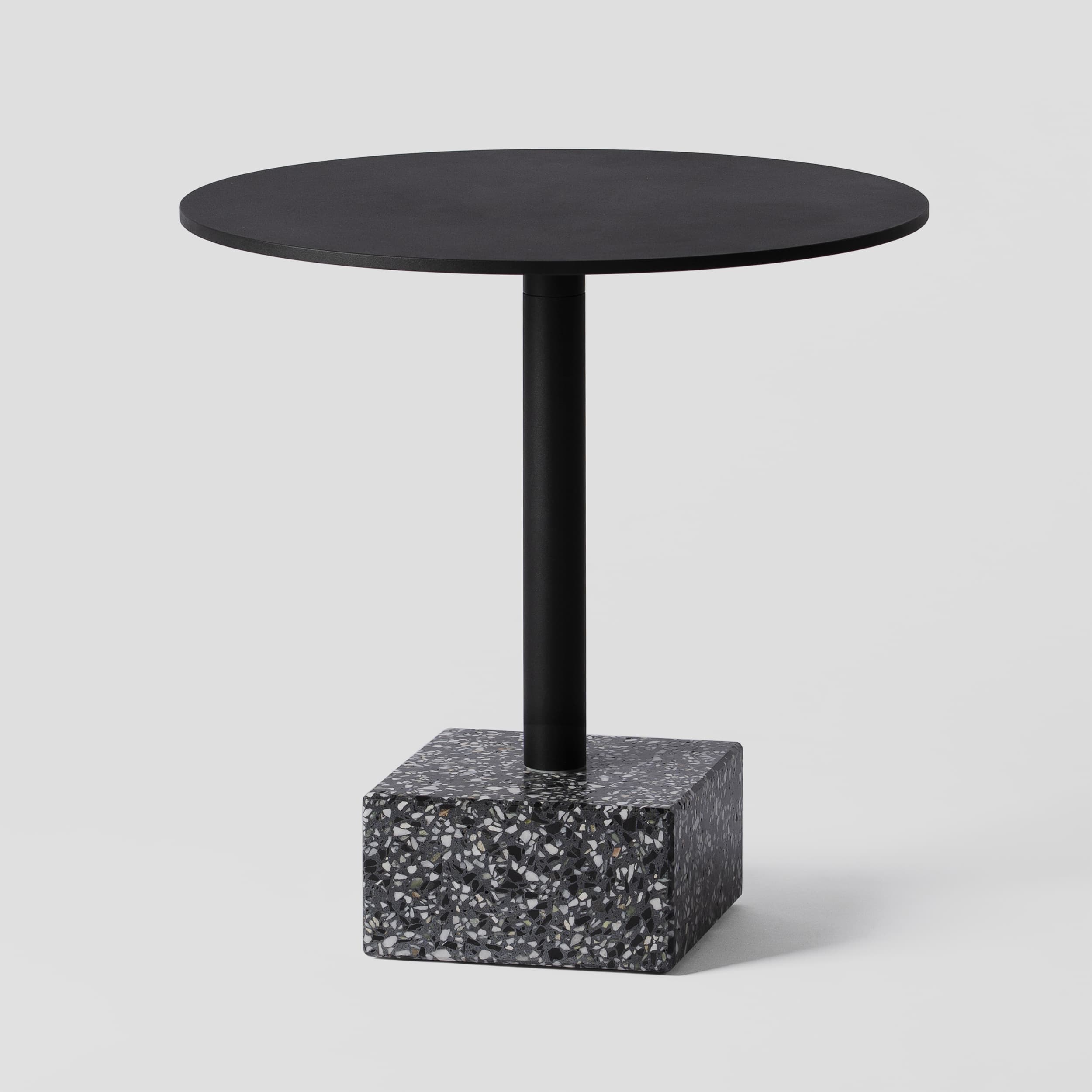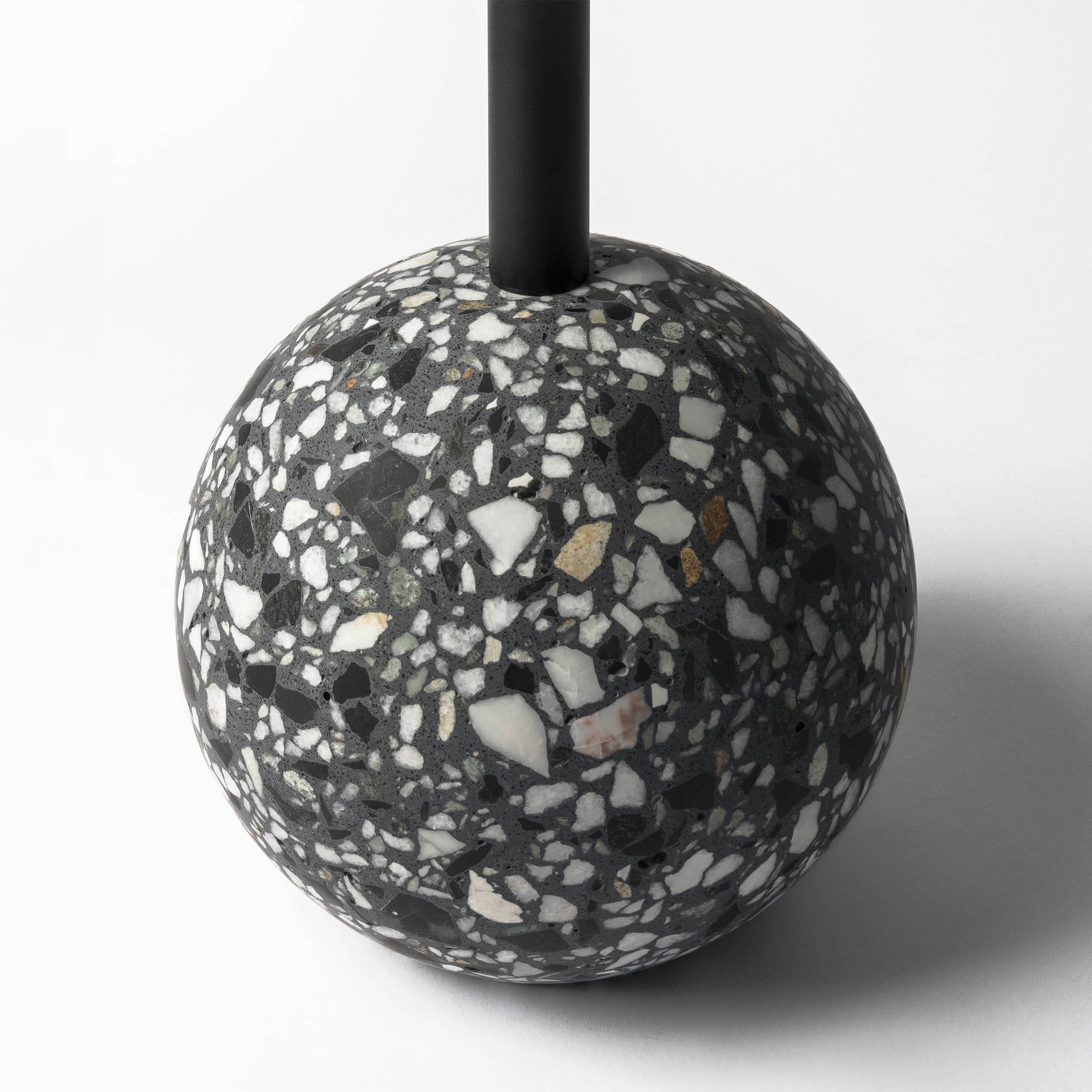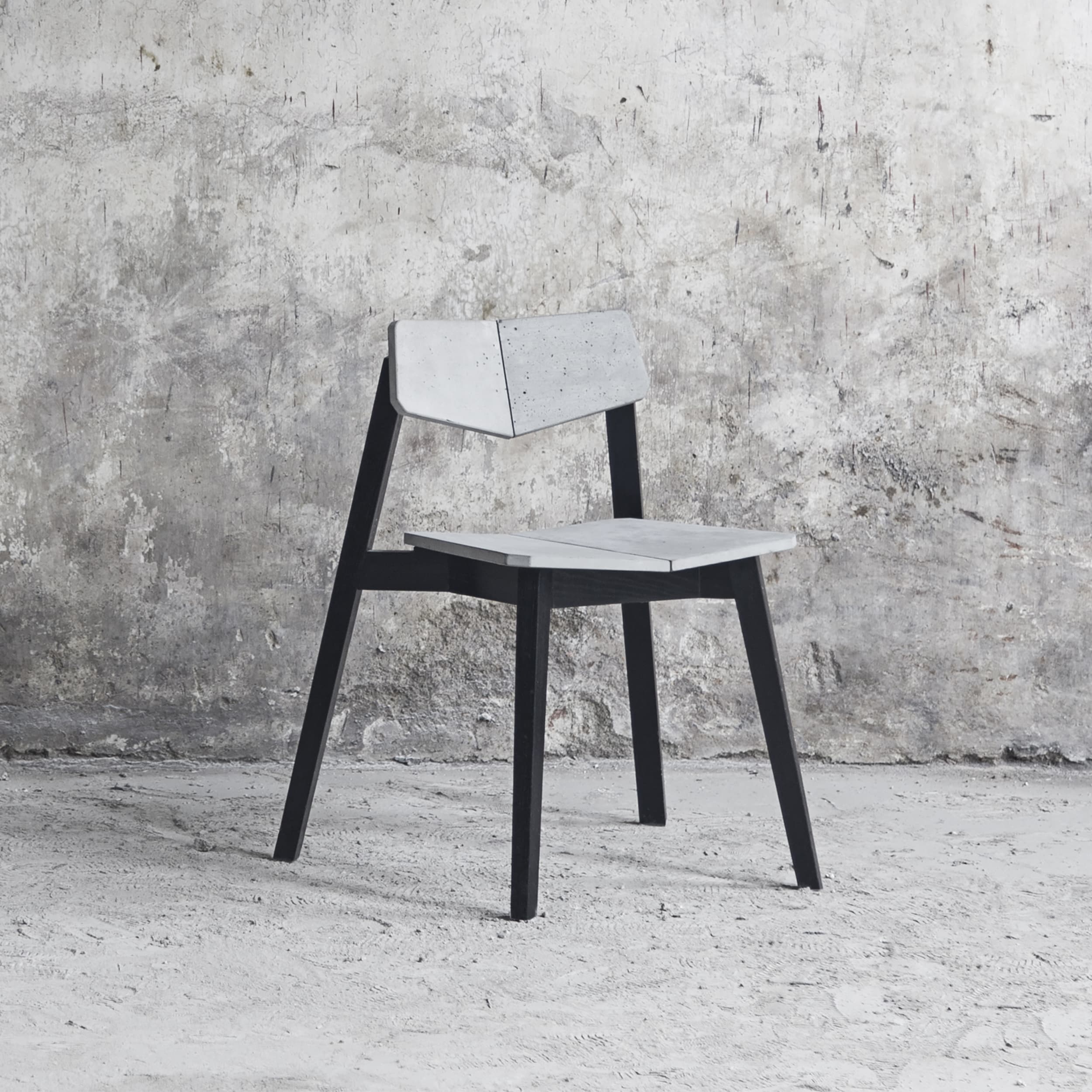


Inorganic Editing: Deeply Localised 3D‑Printed Public Furniture in Qingshan Village, Hangzhou
Time: March – June 2024
Location: Qingshan Village, Hangzhou, China
Construction Waste + Traditional Shell‑Lime Technique + On‑Site 3D Printing = A Rural Local Micro‑Circular System
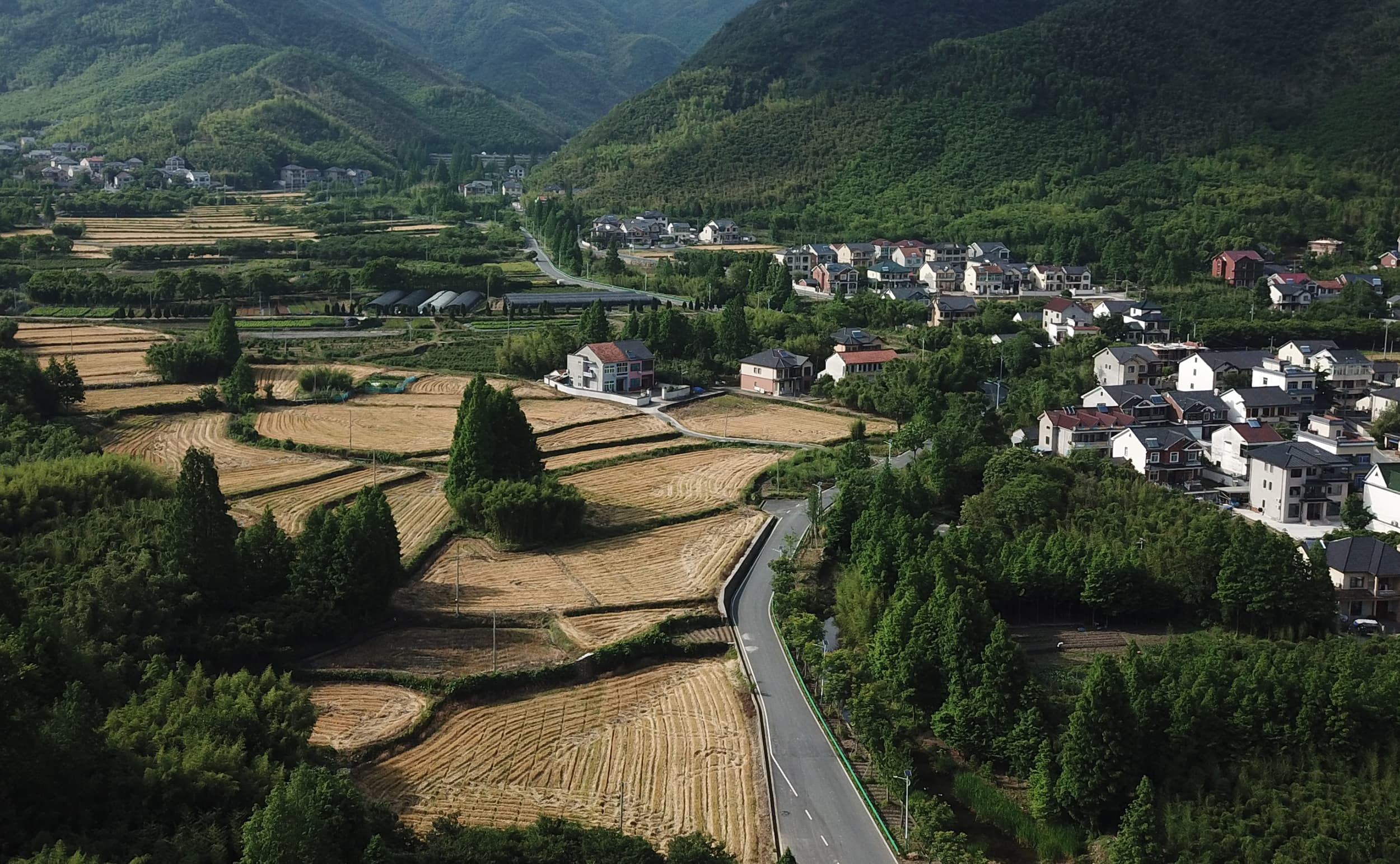
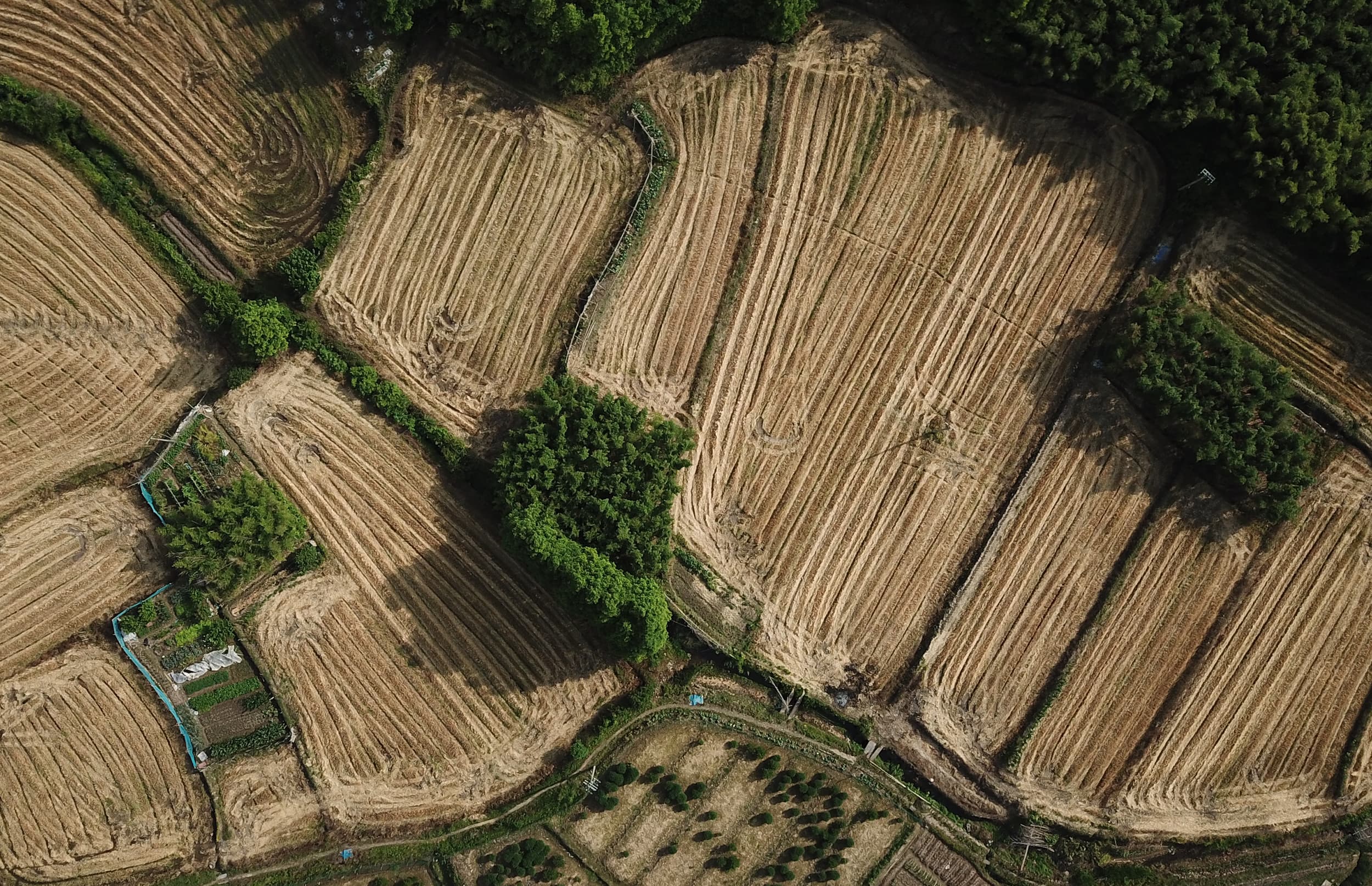
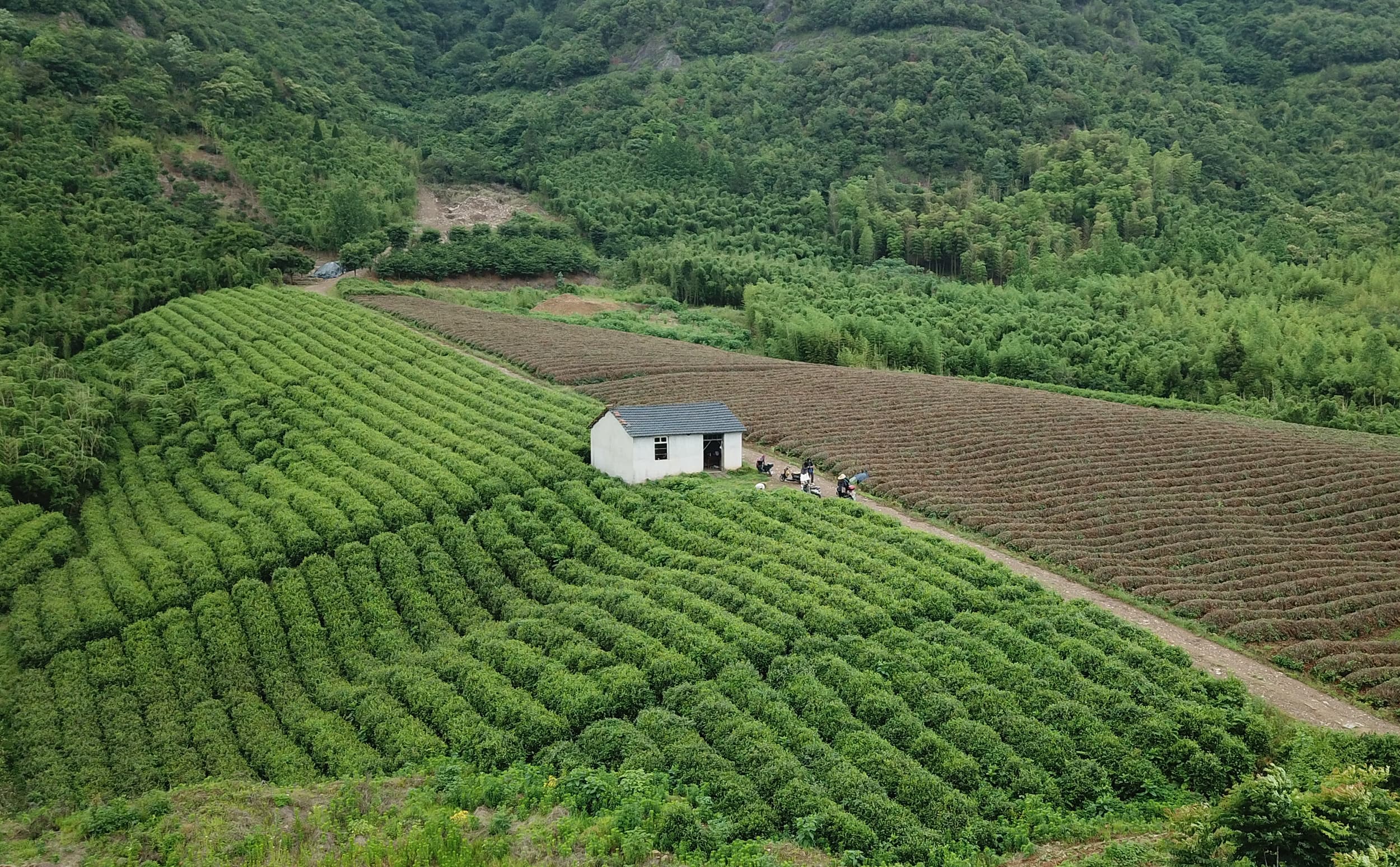
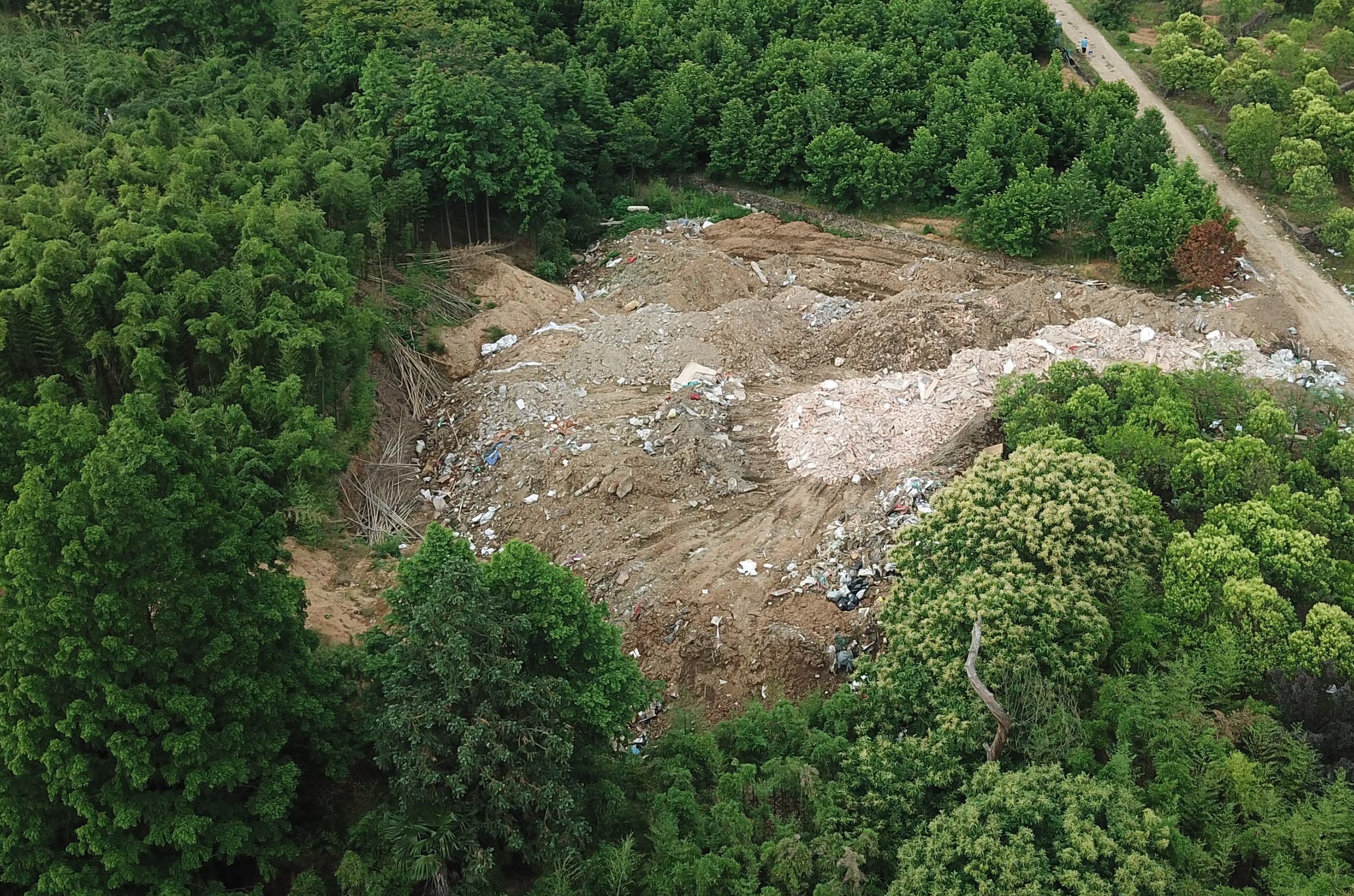
Amid intertwined globalisation and urbanisation, rural construction faces compound challenges: demolition generates massive volumes of construction waste, straining landfill capacity; region‑specific vernacular crafts are increasingly marginalised and fading from daily building practices; while widely hyped digital construction technologies remain largely confined to experimental demonstrations, failing to truly serve grassroots rural needs.
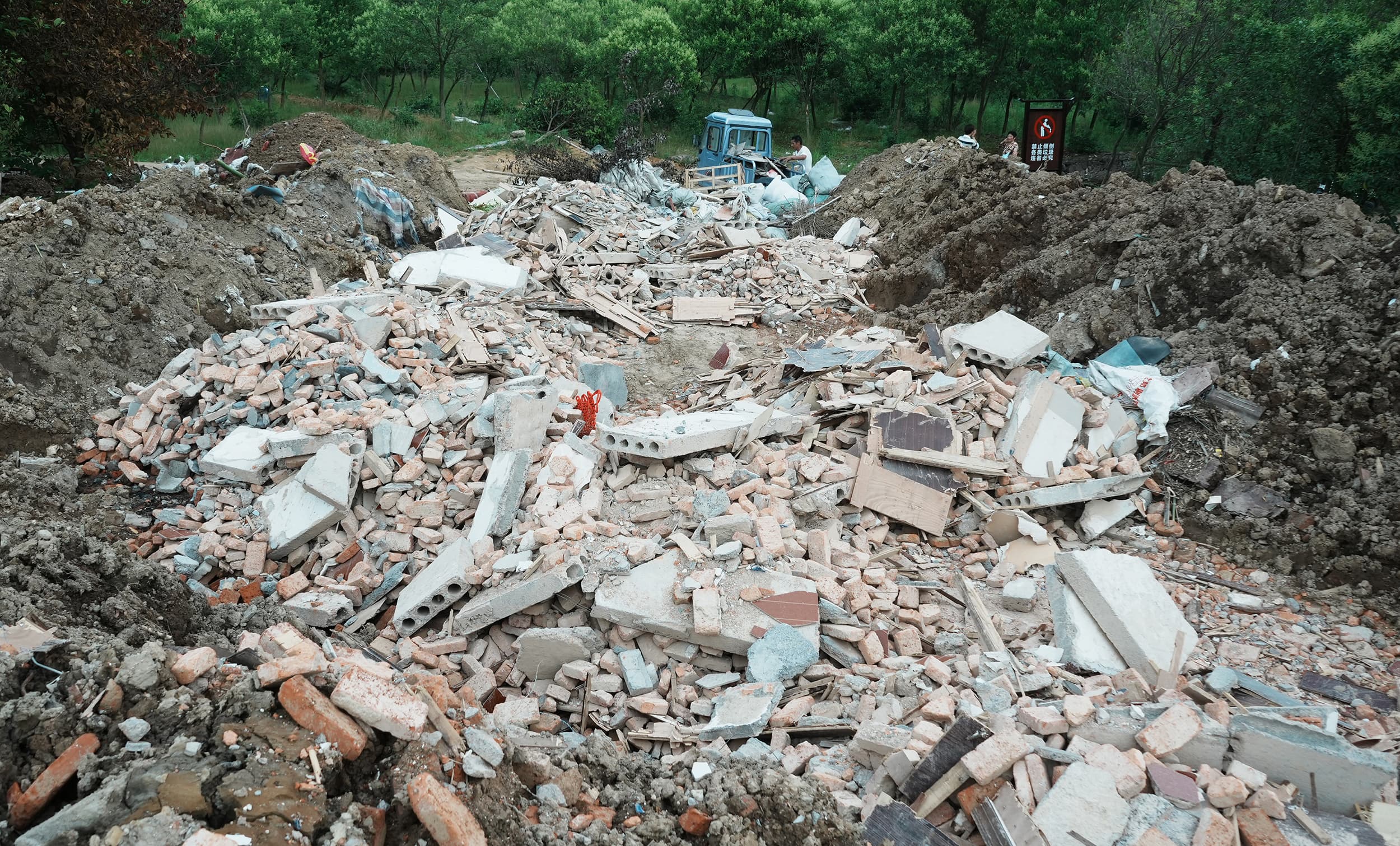
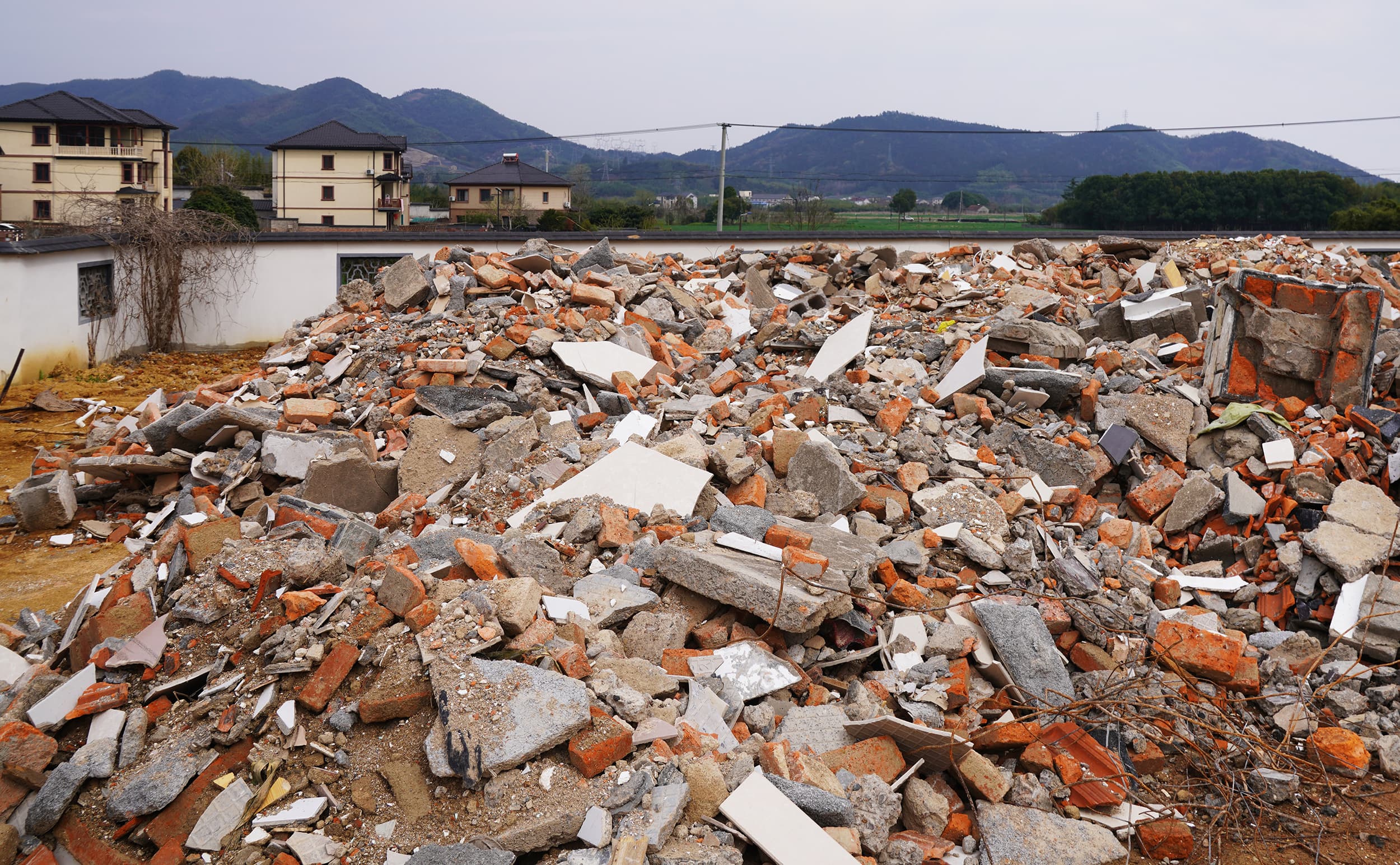
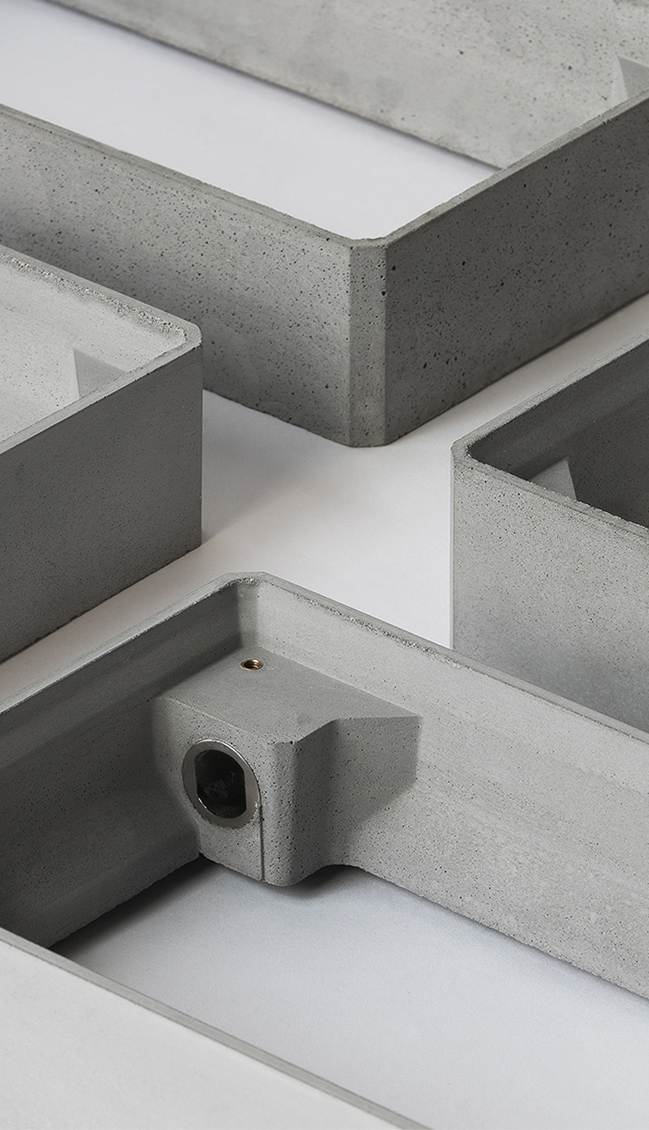
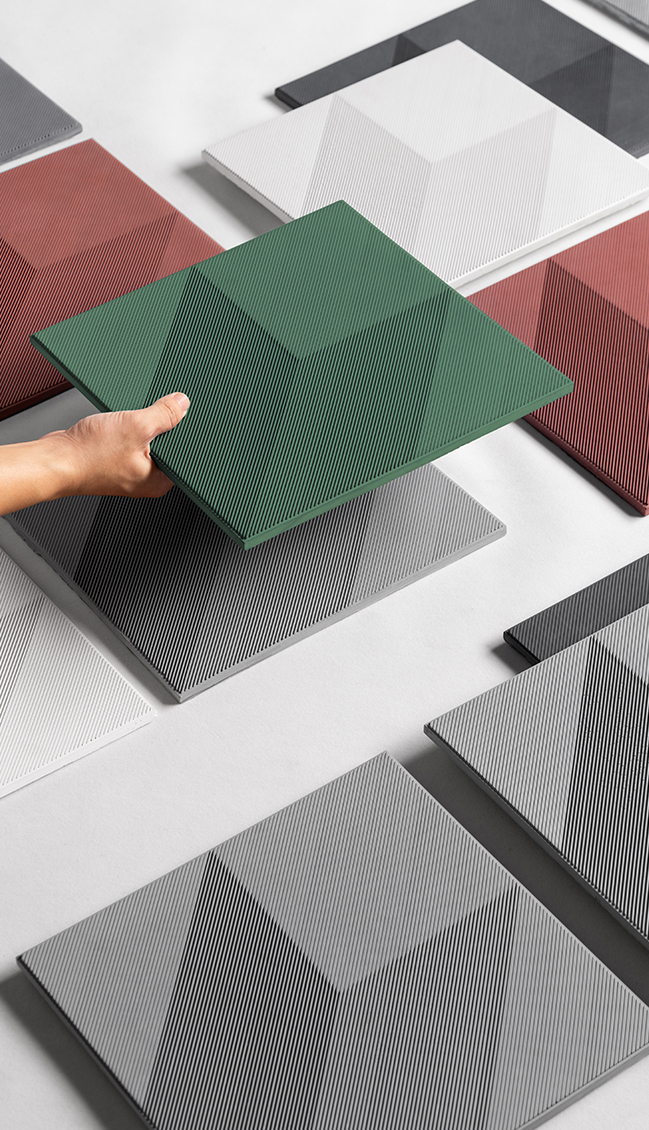
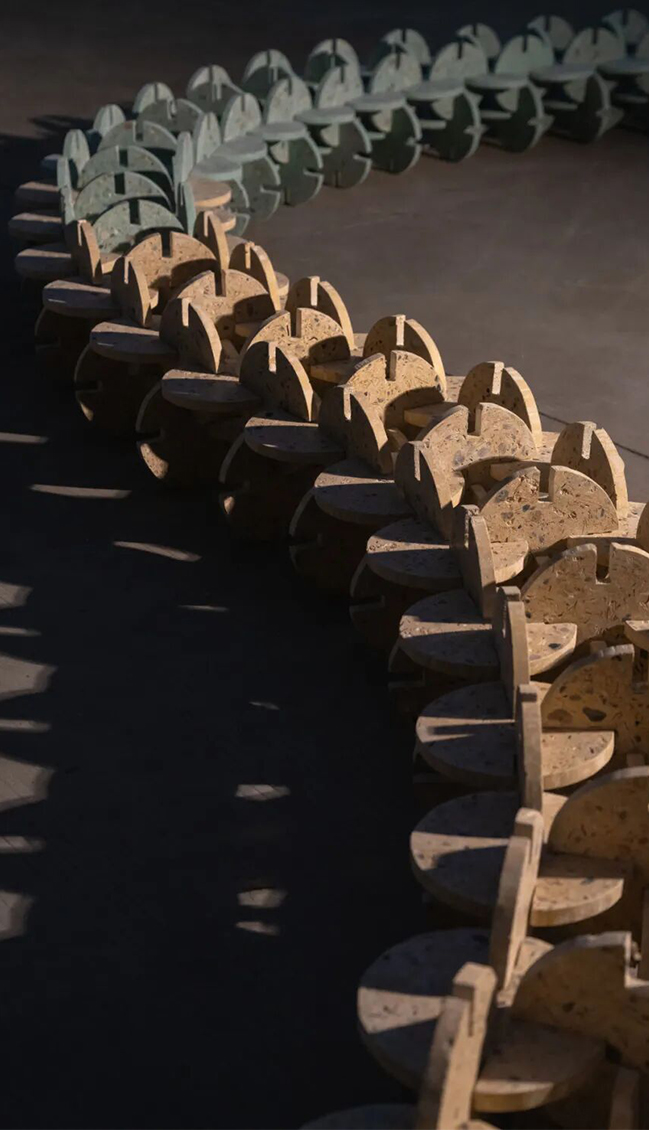
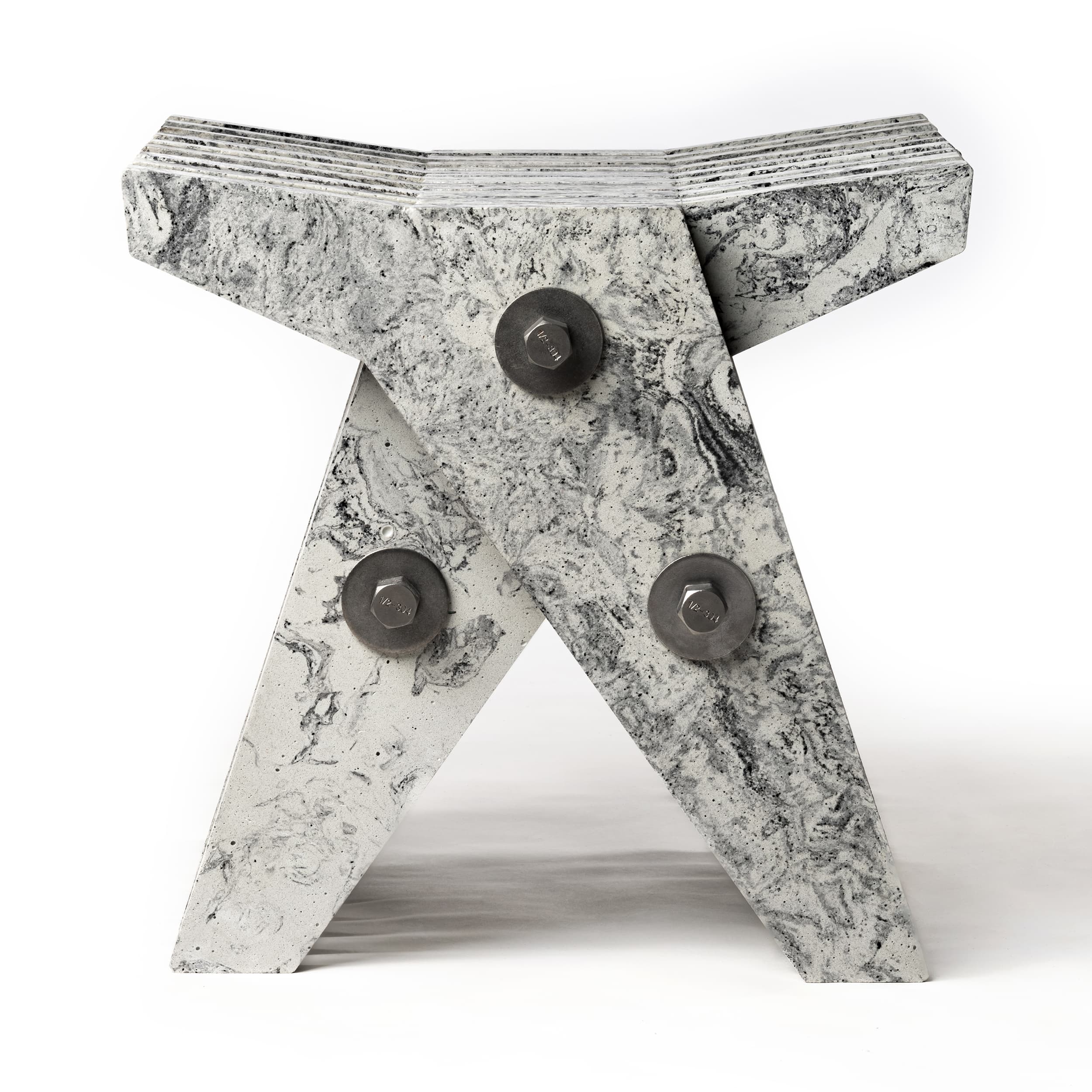
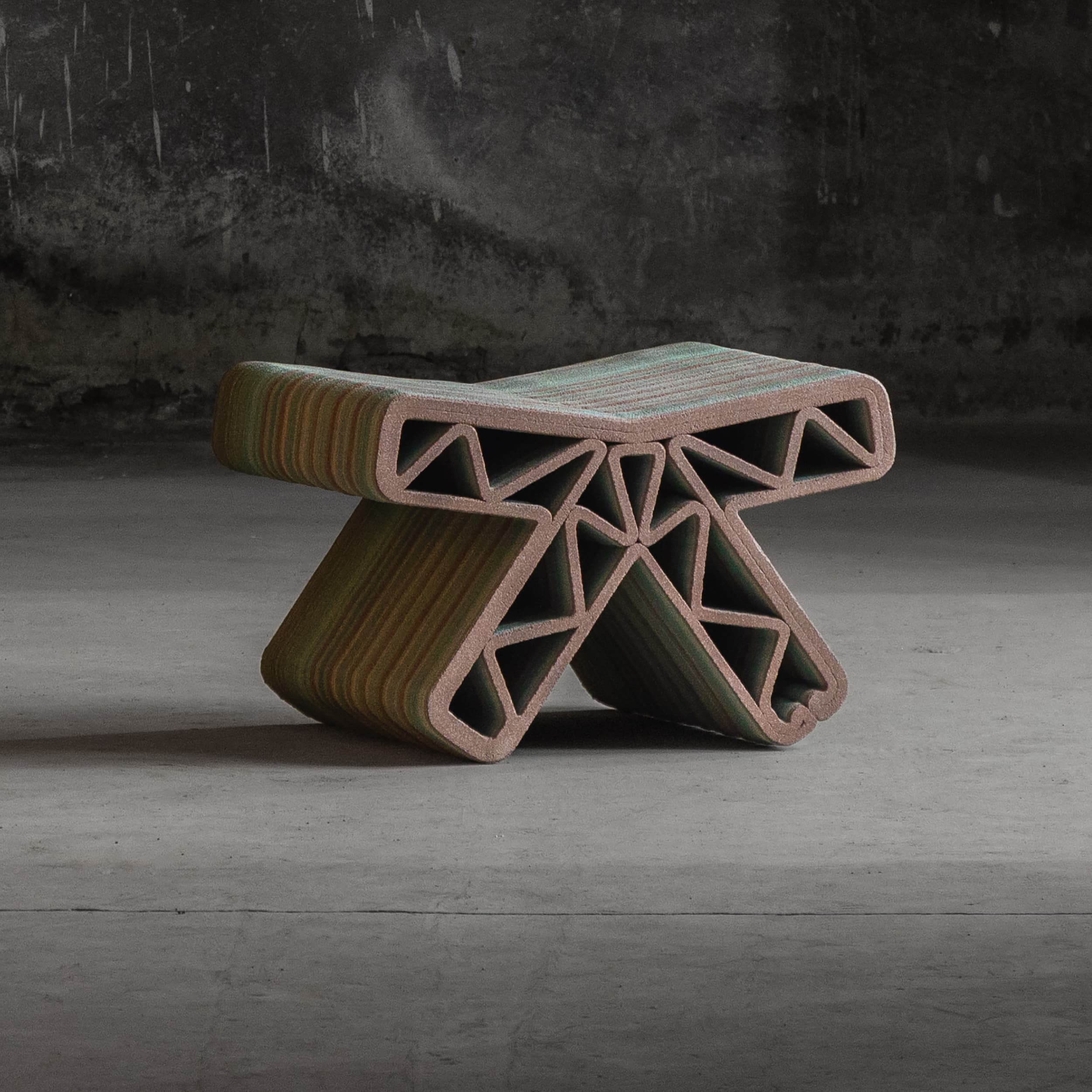
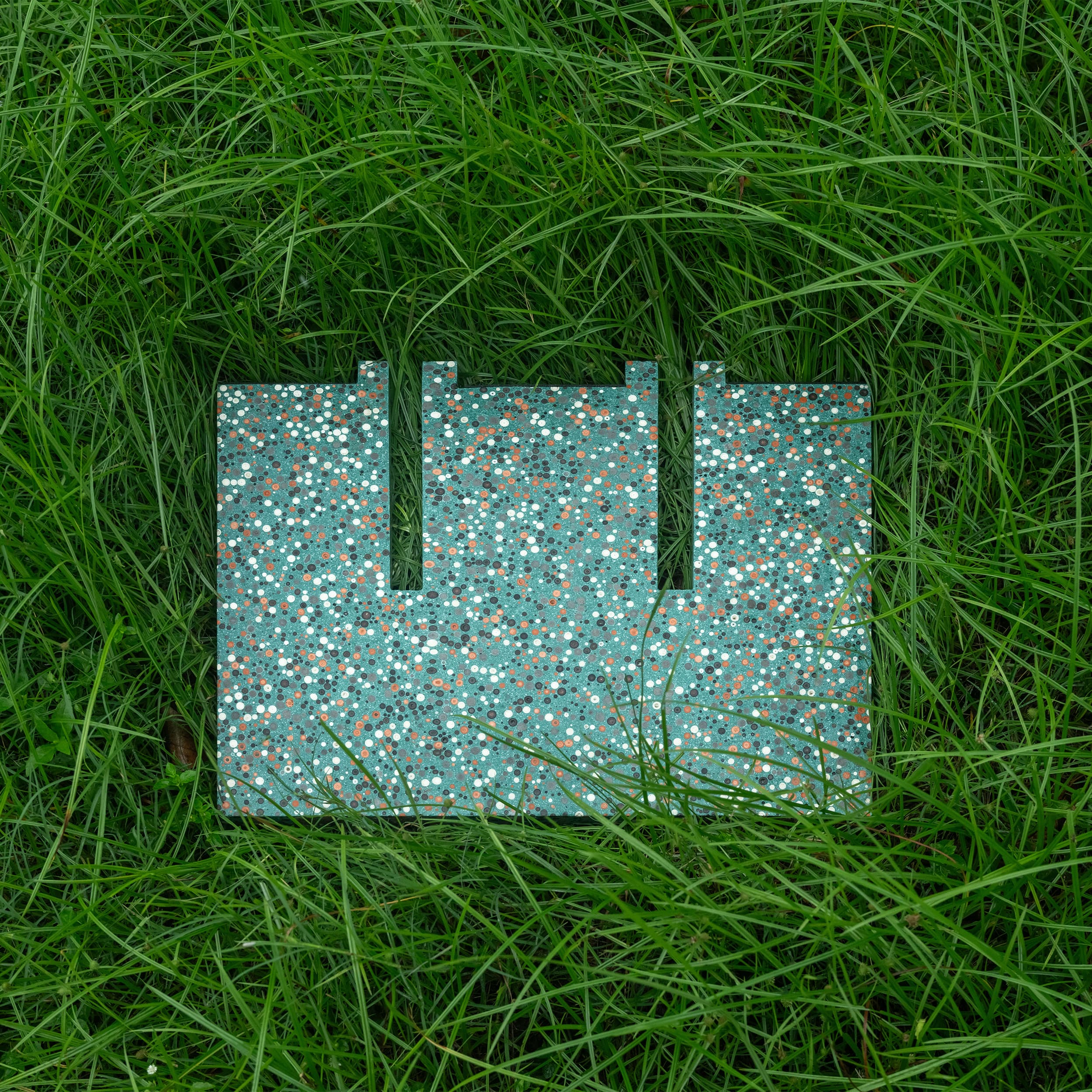
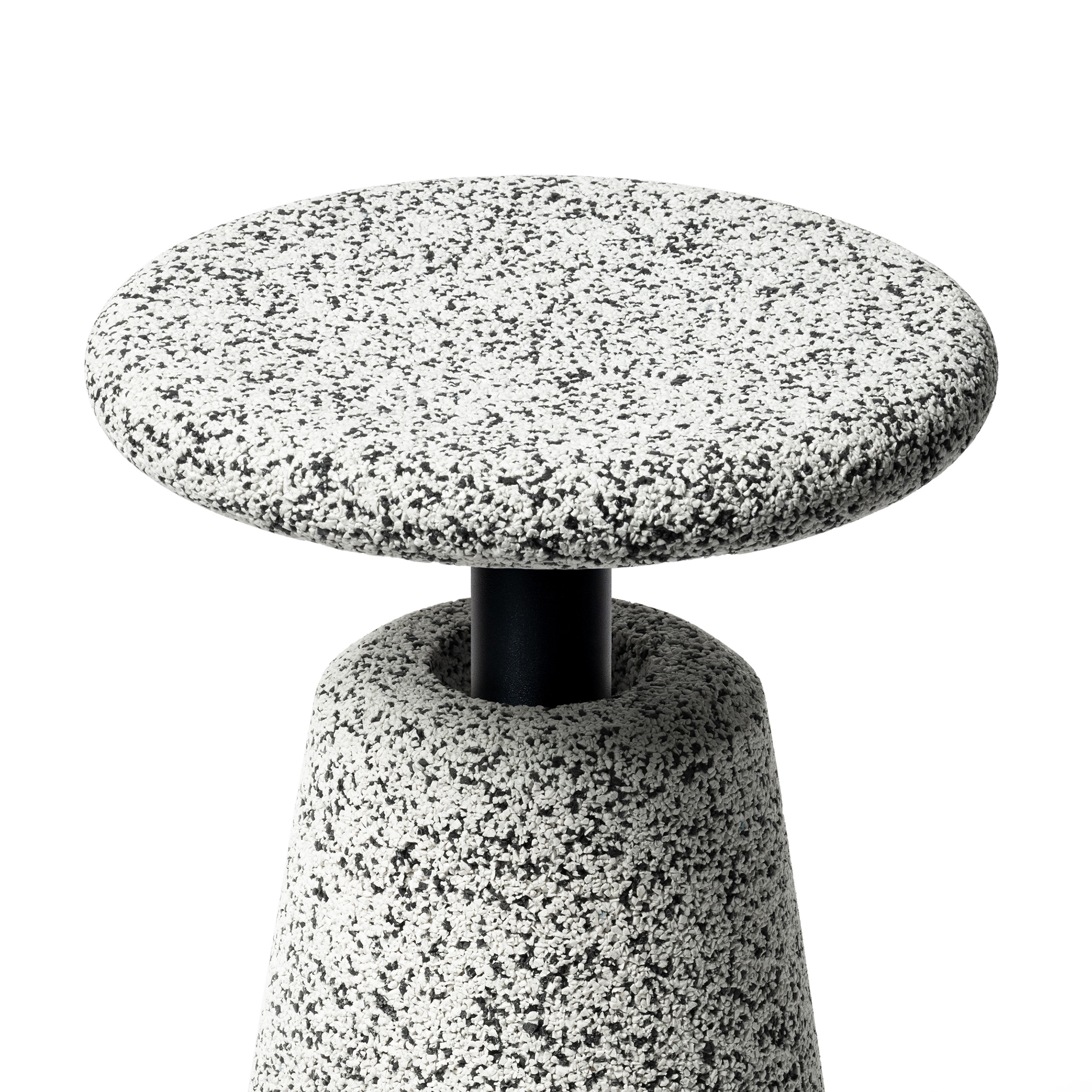
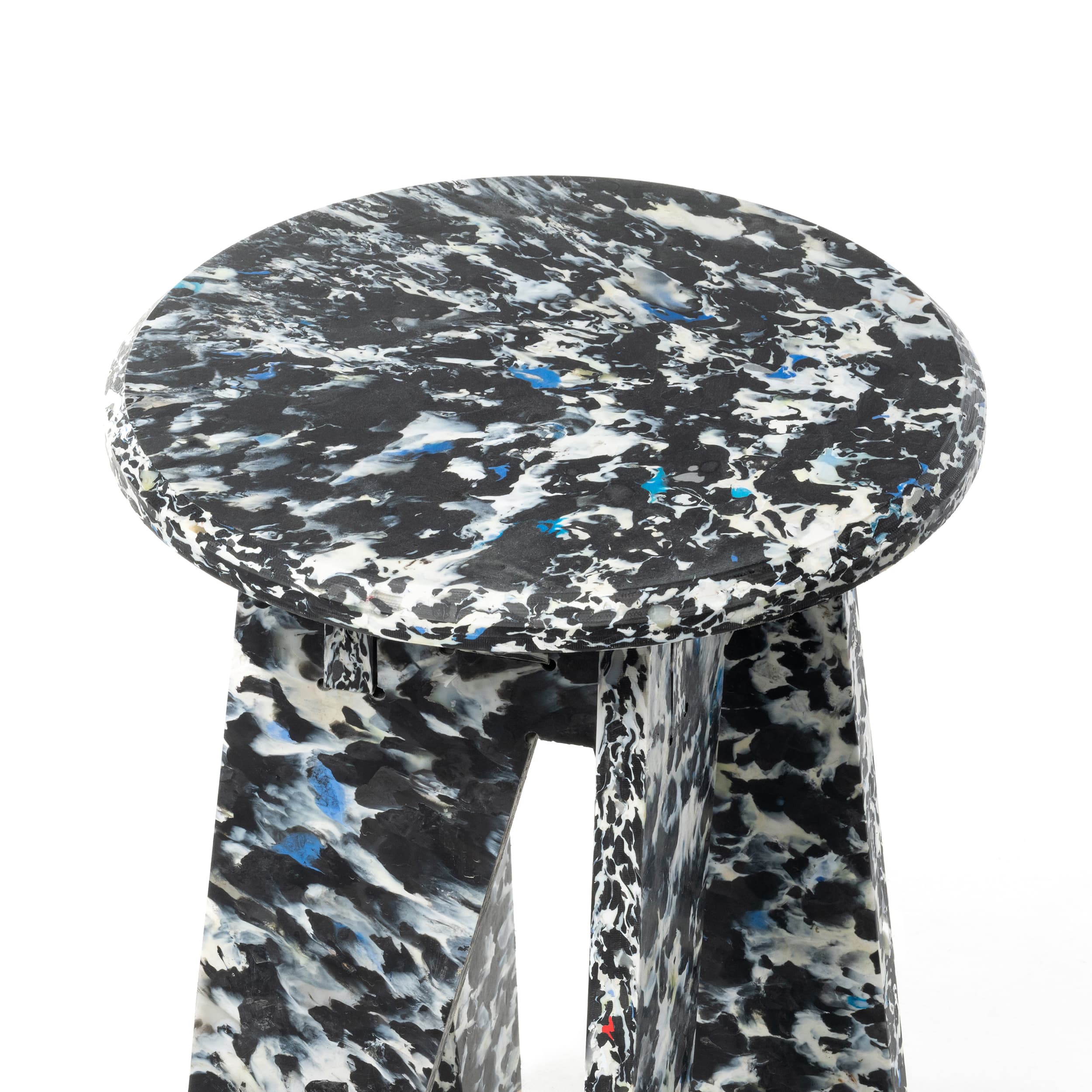
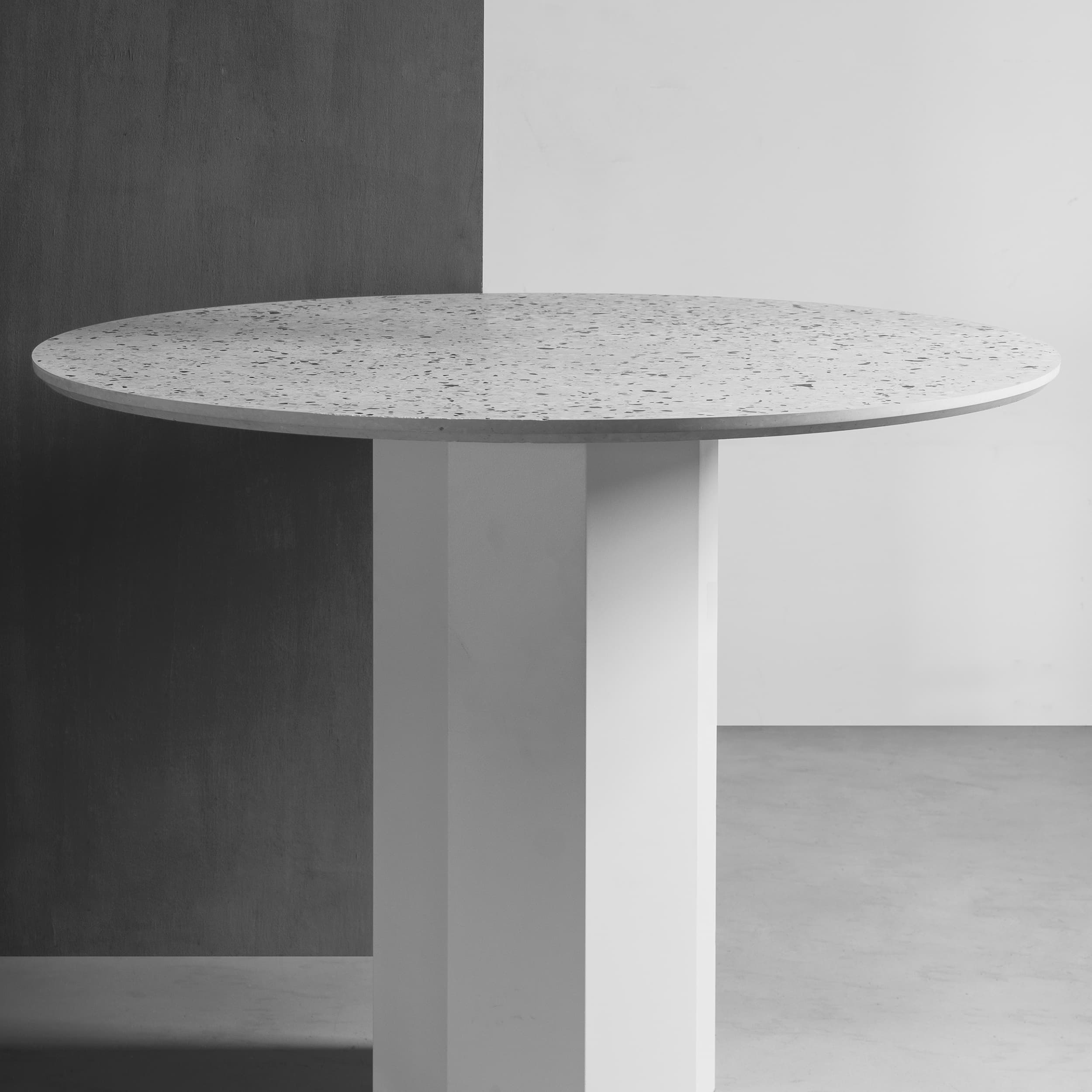
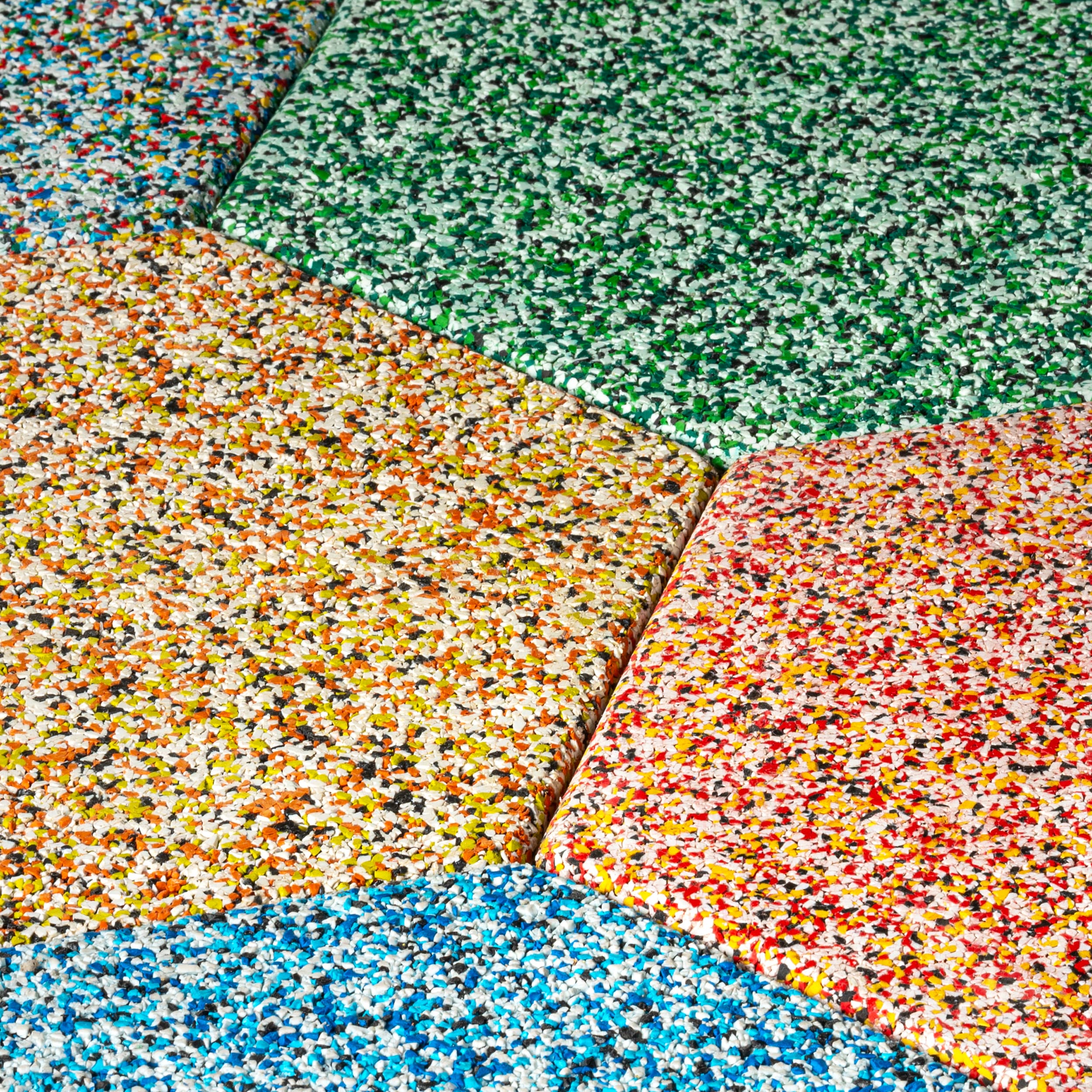
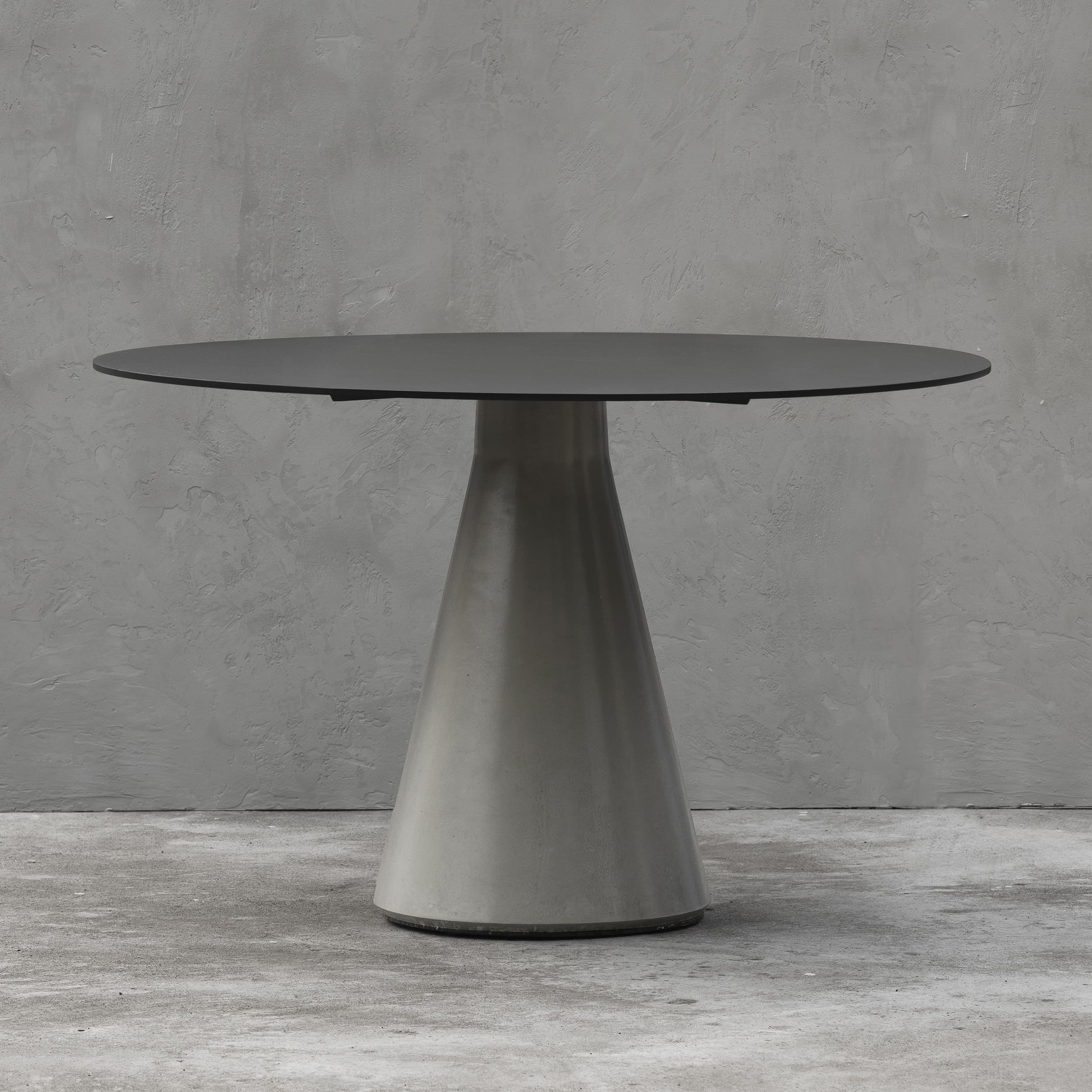
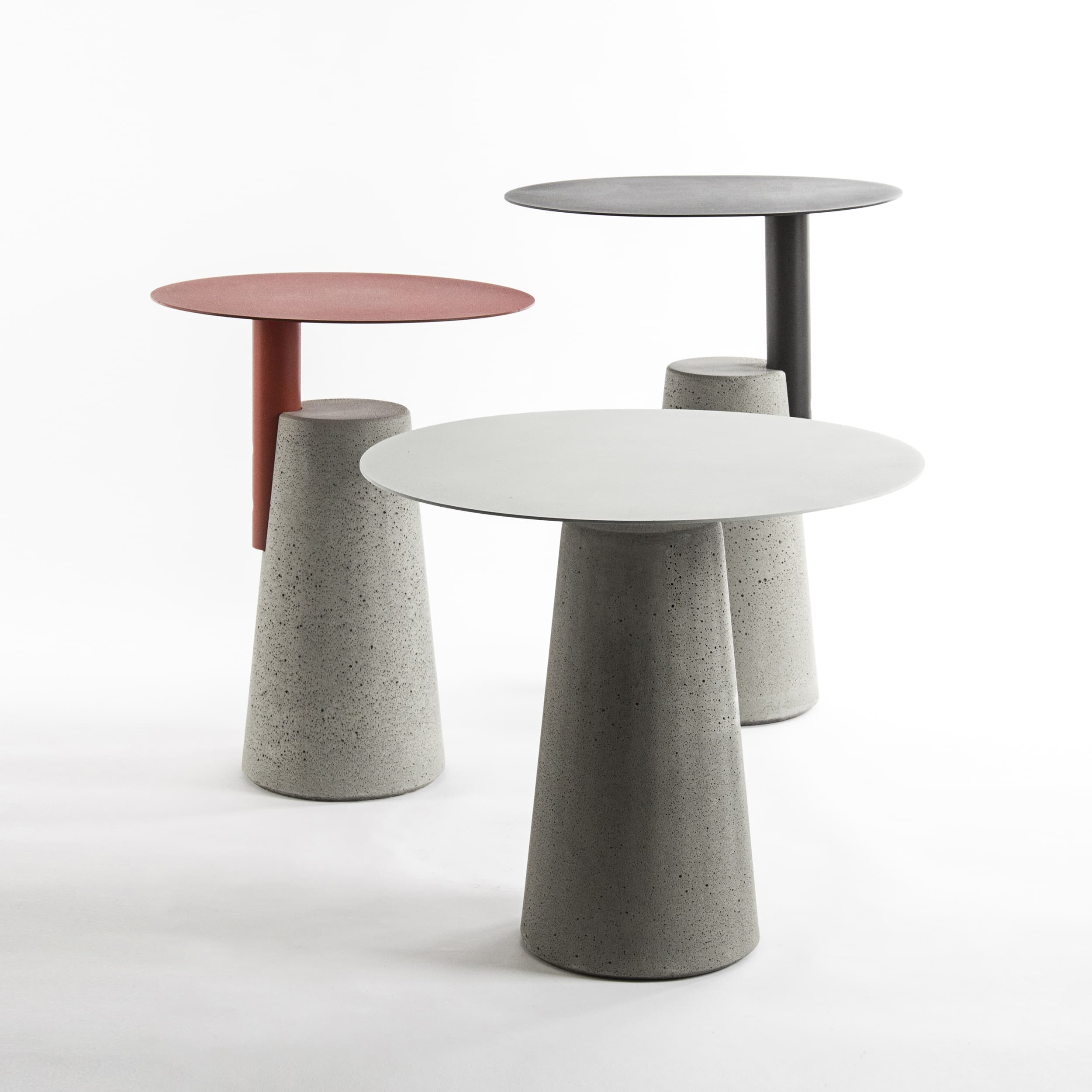
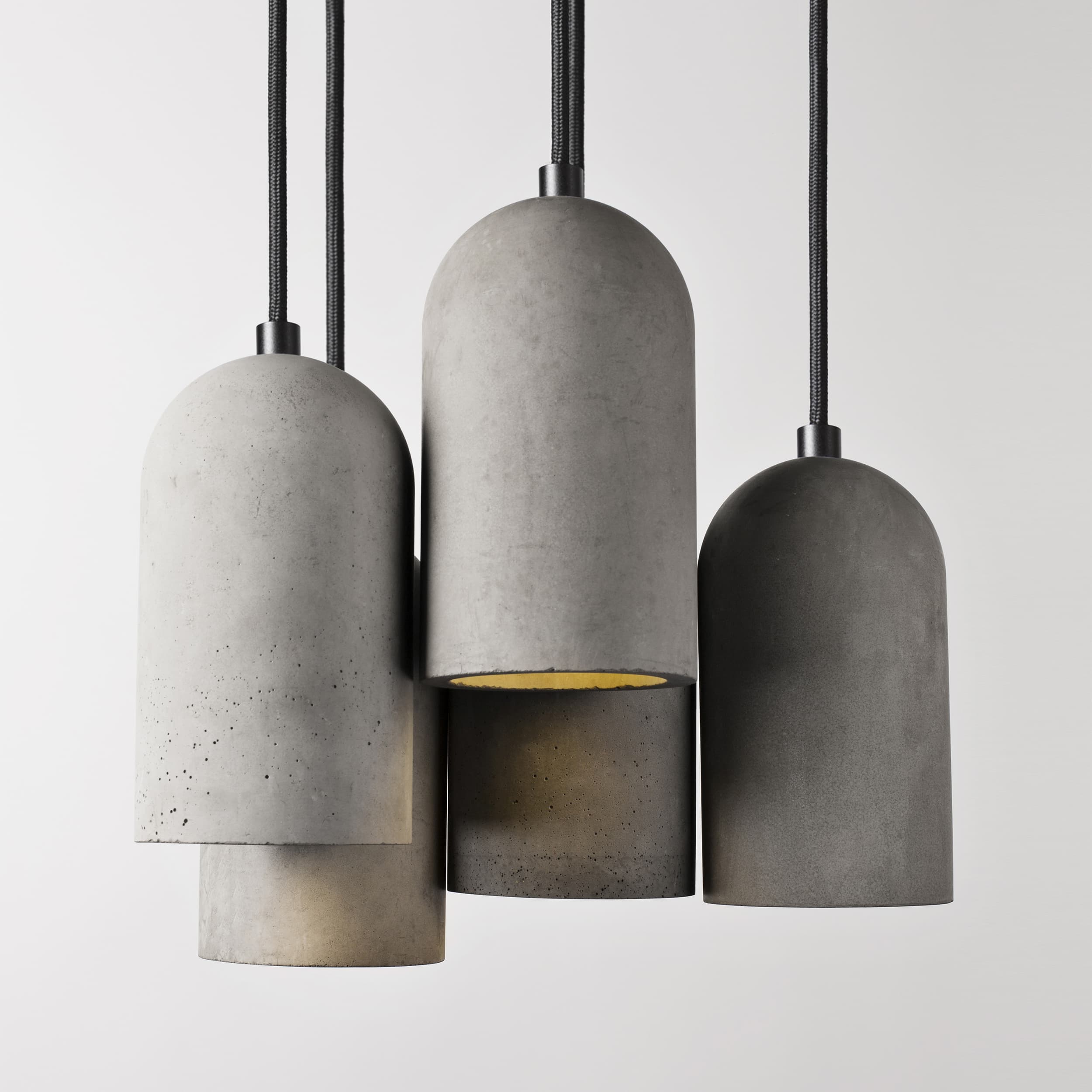
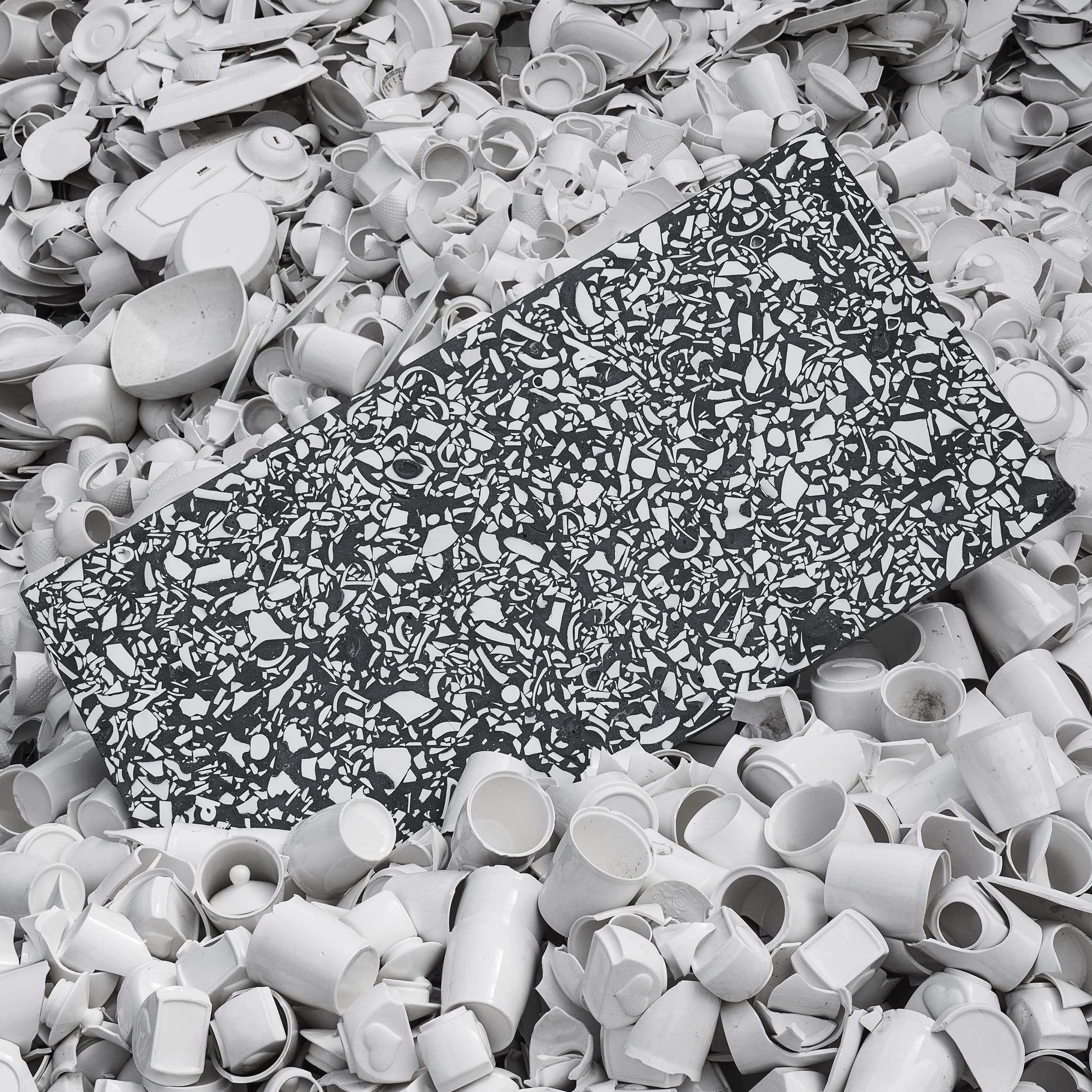
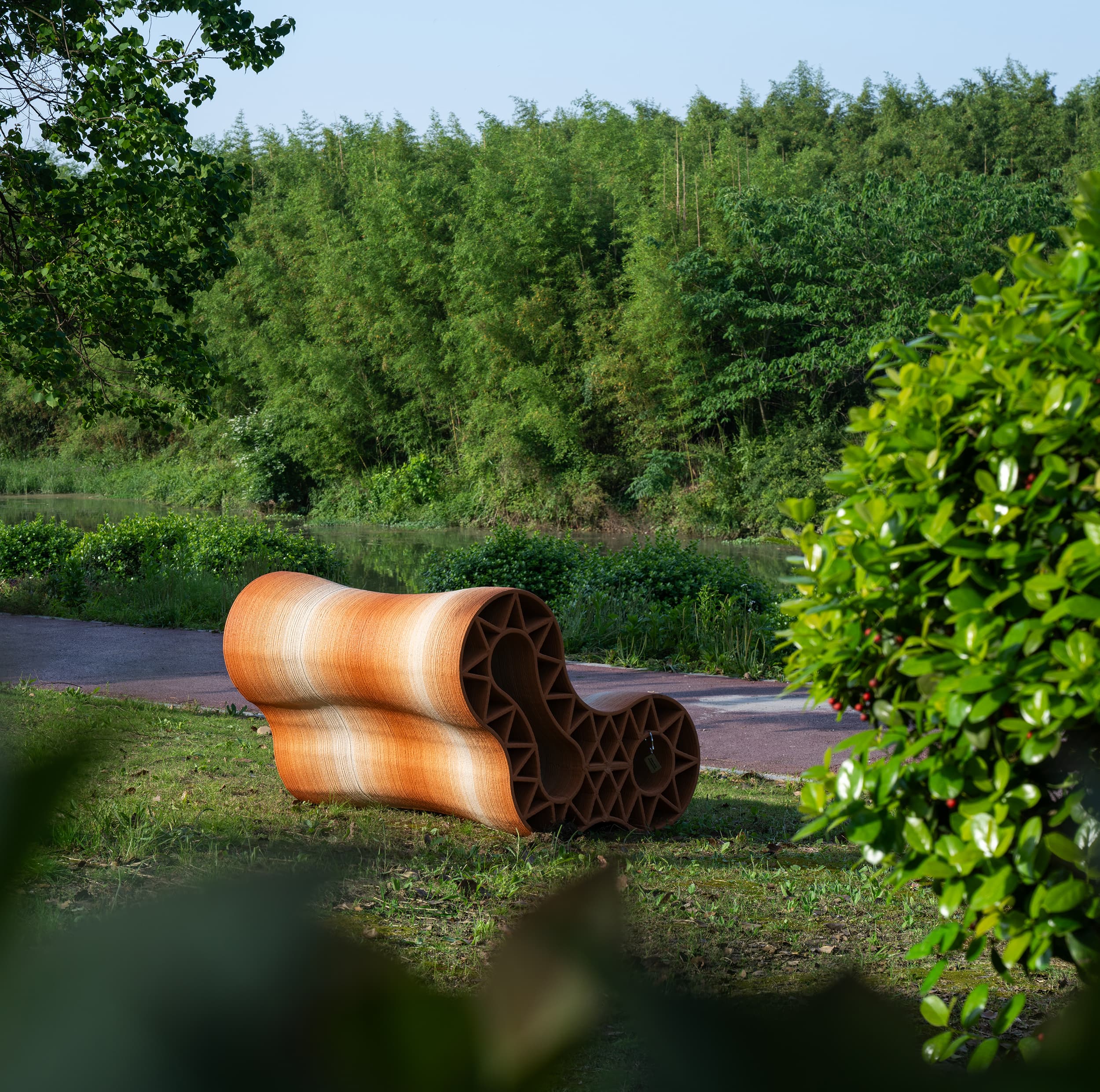
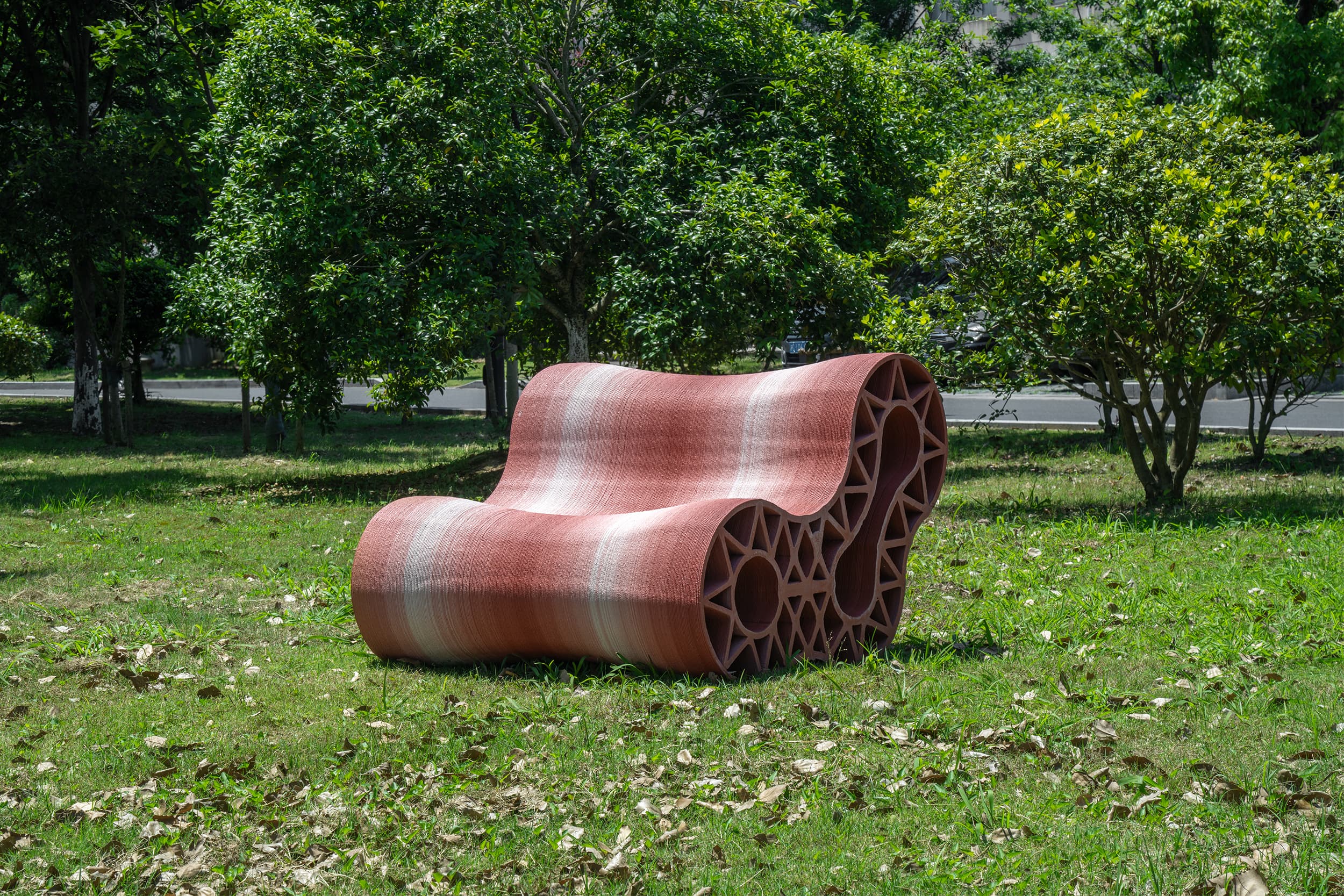
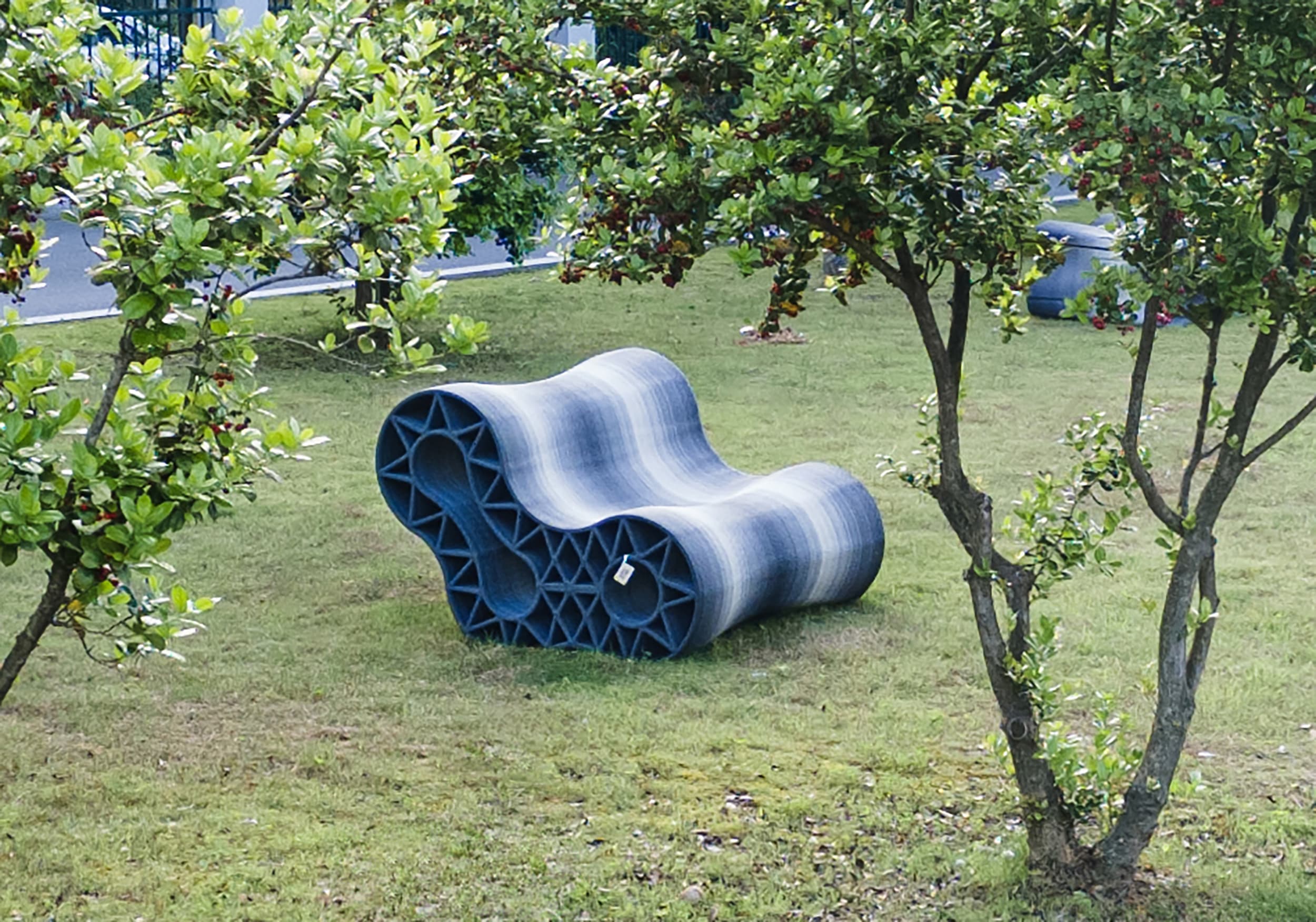
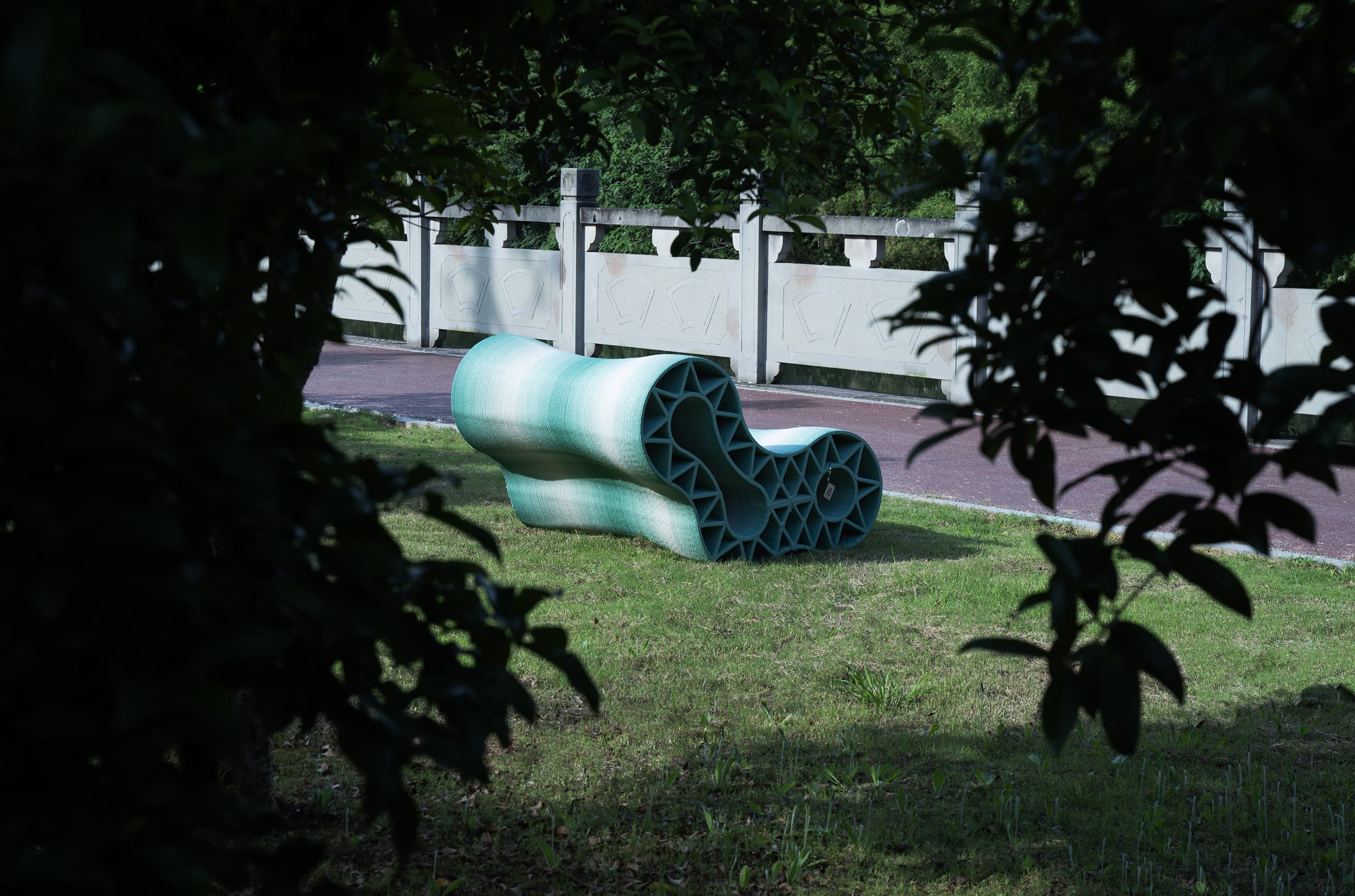
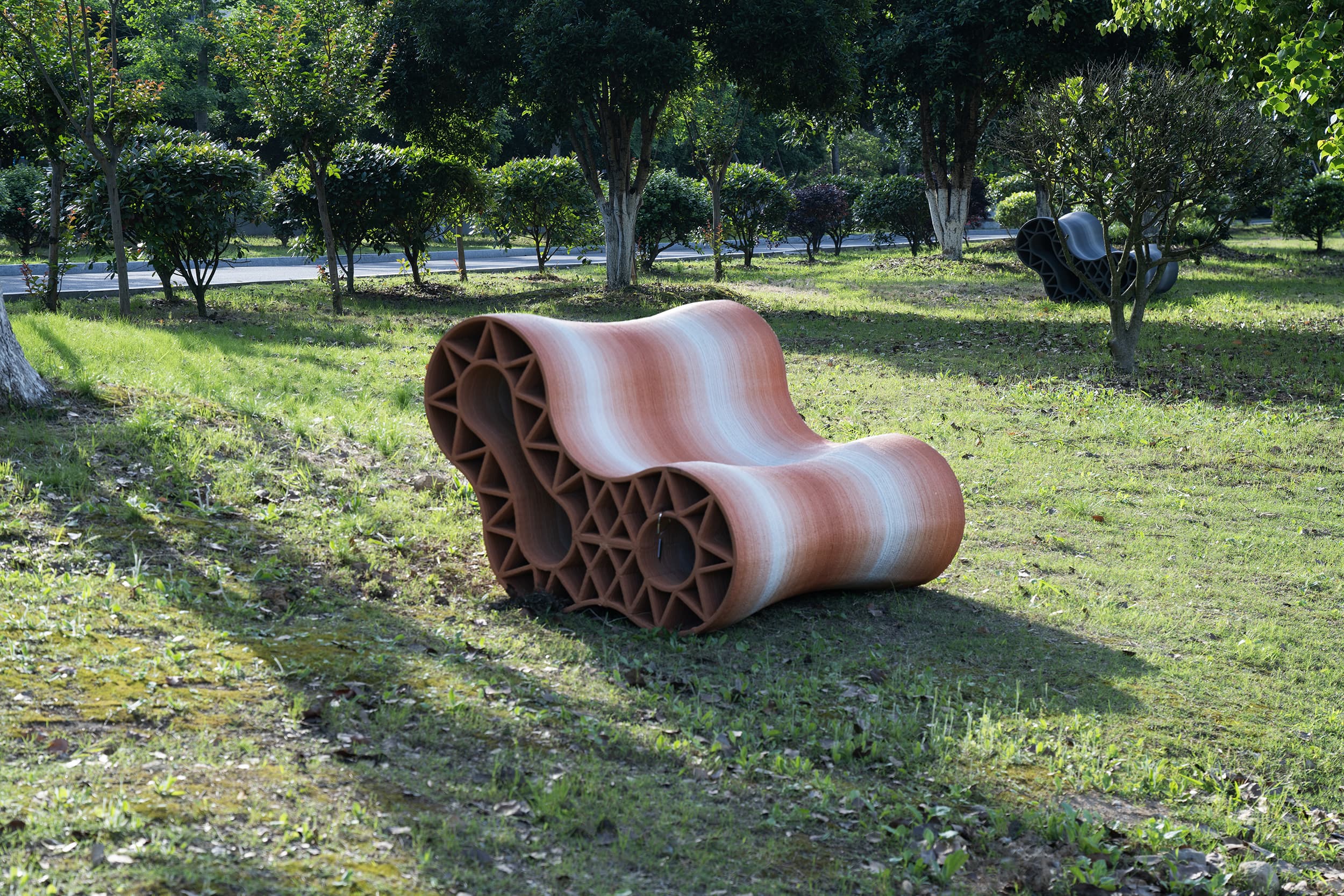
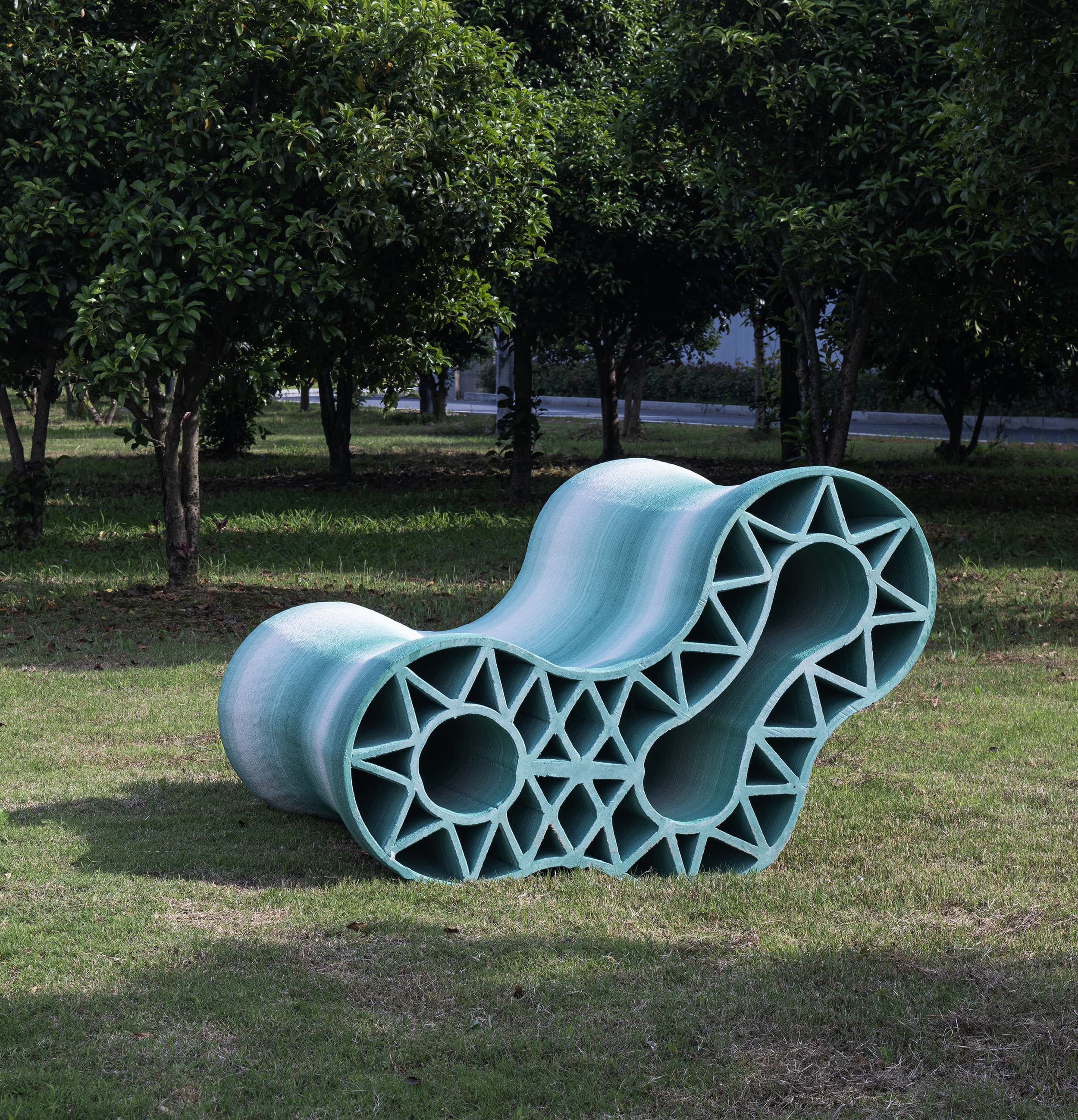
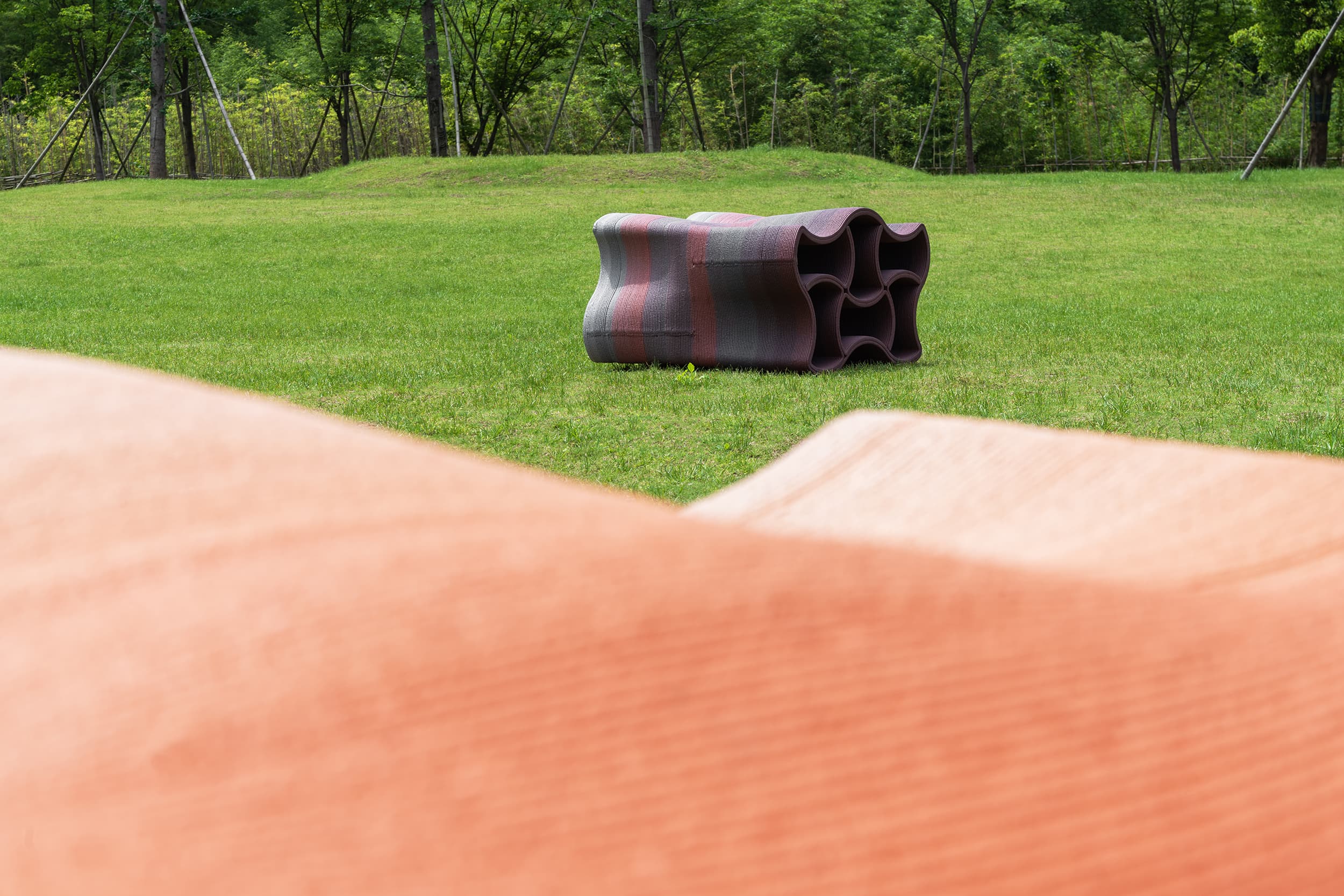
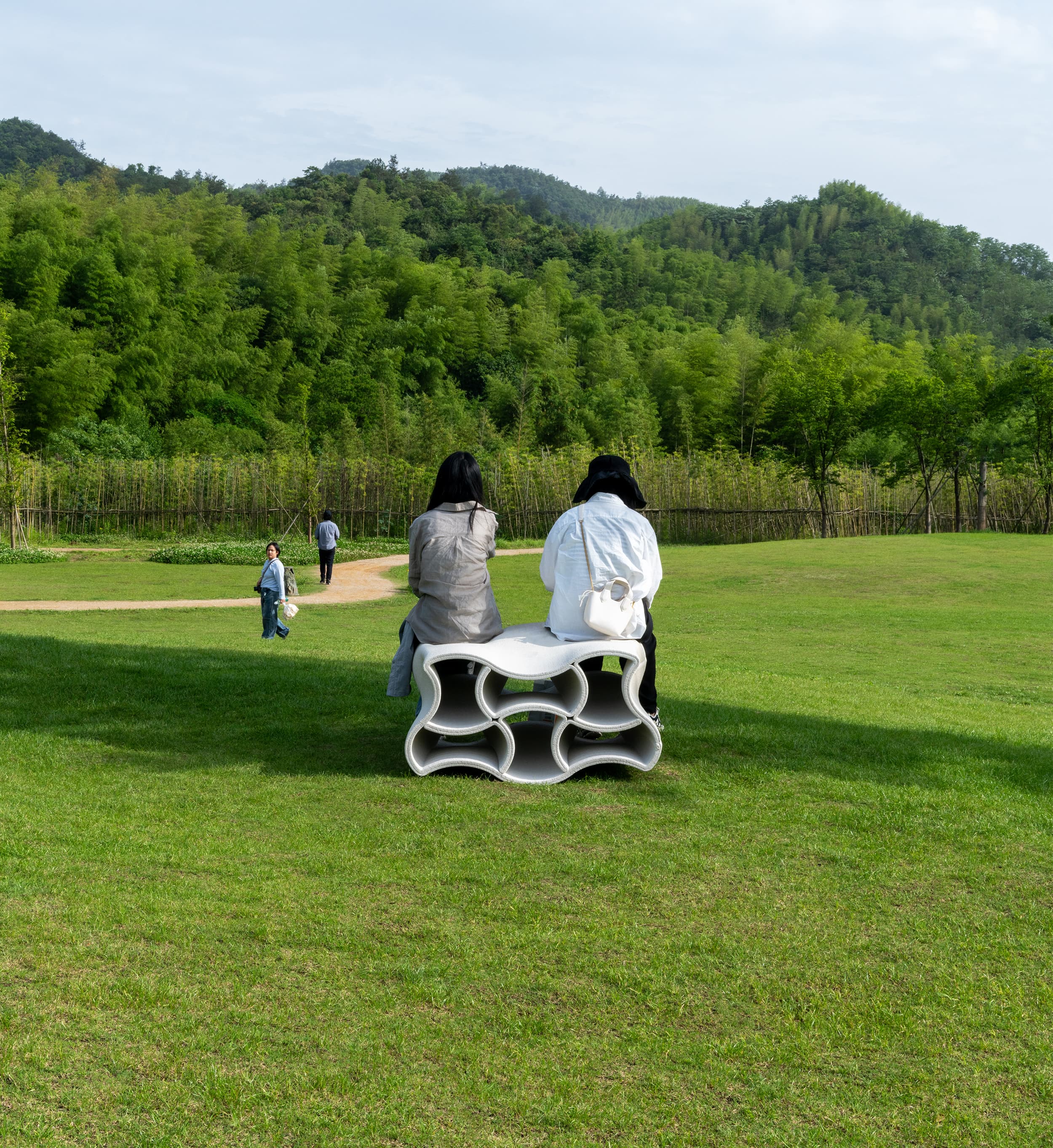
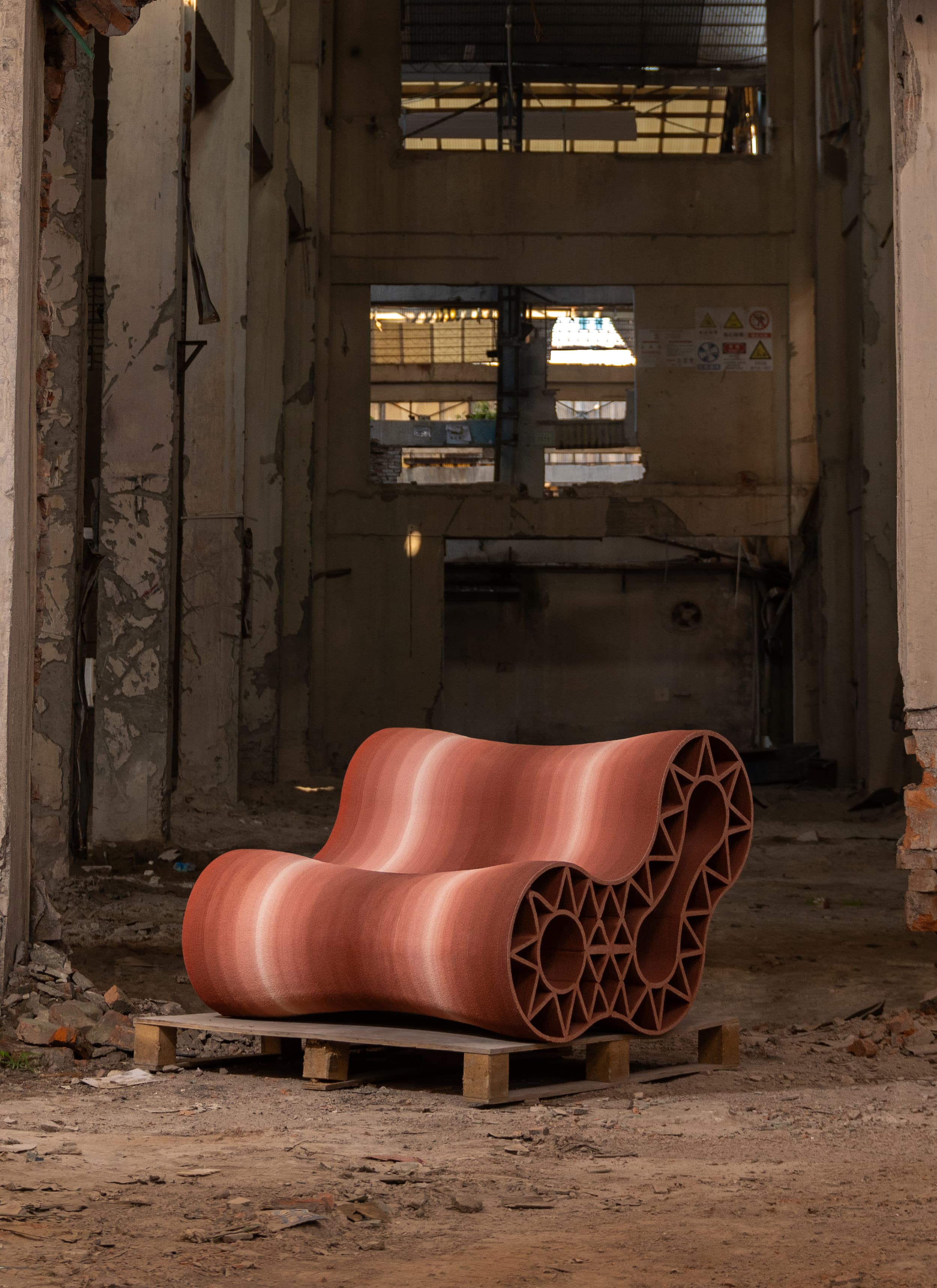
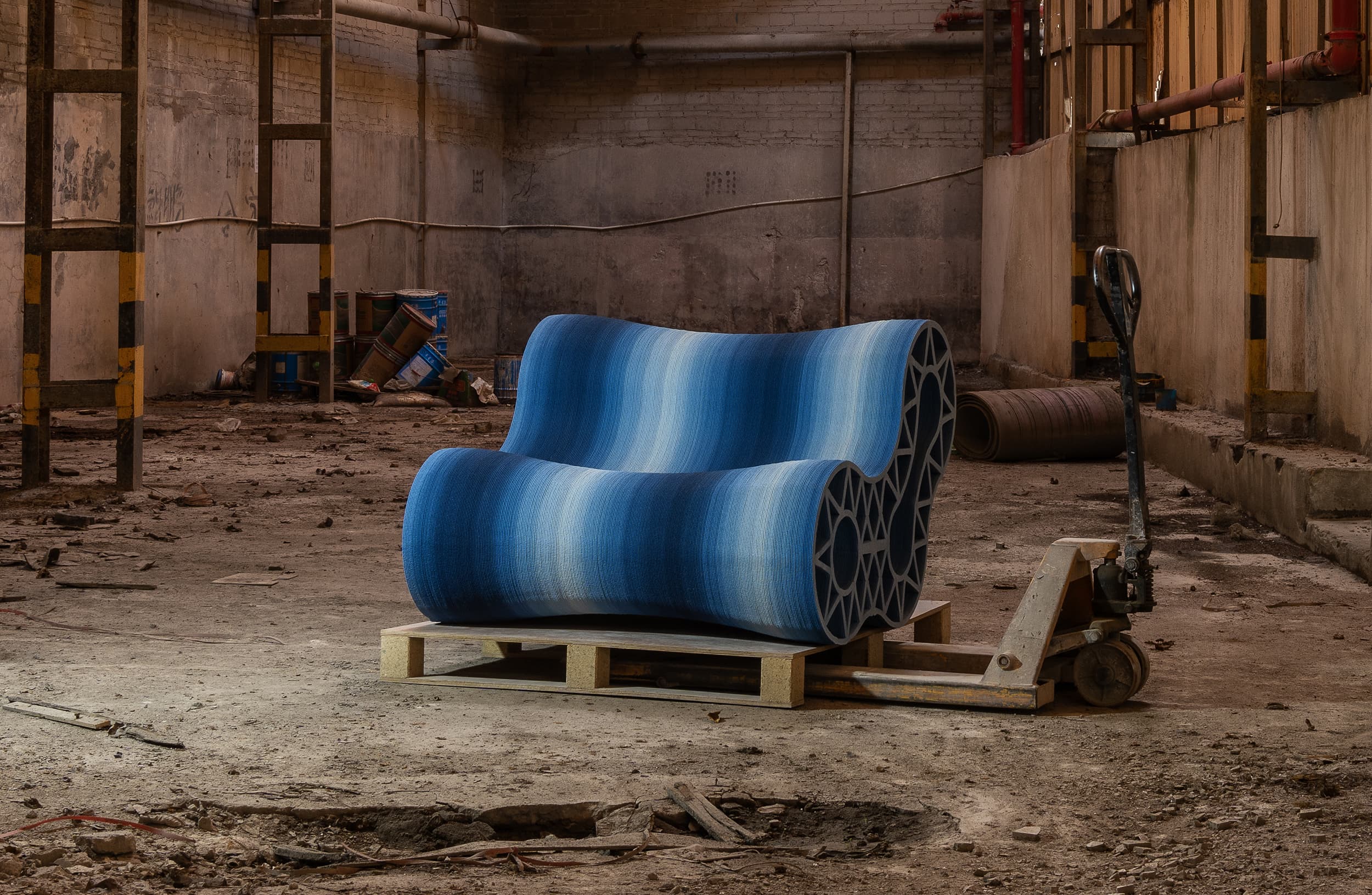
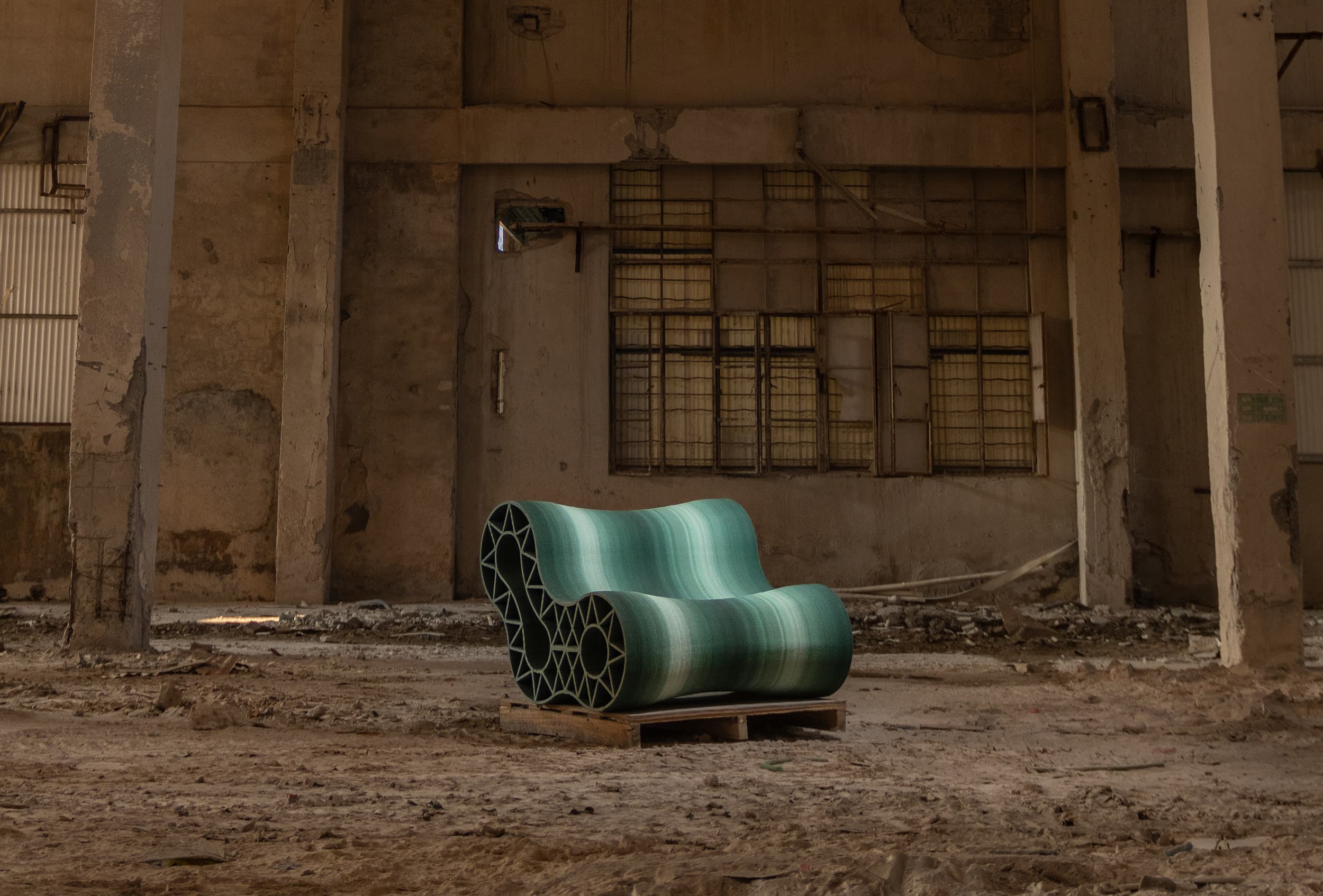
BENTU’s Inorganic Editing project in Qingshan Village adopts deep localisation as its core strategy to deliver a holistic solution. Using demolished bricks and rubble as recycled aggregate, refining Jiangnan’s traditional shell‑lime craft into a cementitious binder, and deploying mobile 3D‑printing equipment on‑site, the team fabricates outdoor public furniture directly within the village. Rooted entirely in local materials, traditional craft and digital manufacturing, the project establishes a small‑scale closed‑loop micro‑circular system that achieves triple synergy: waste valorisation, the living inheritance of traditional techniques, and rural empowerment through digital technology.
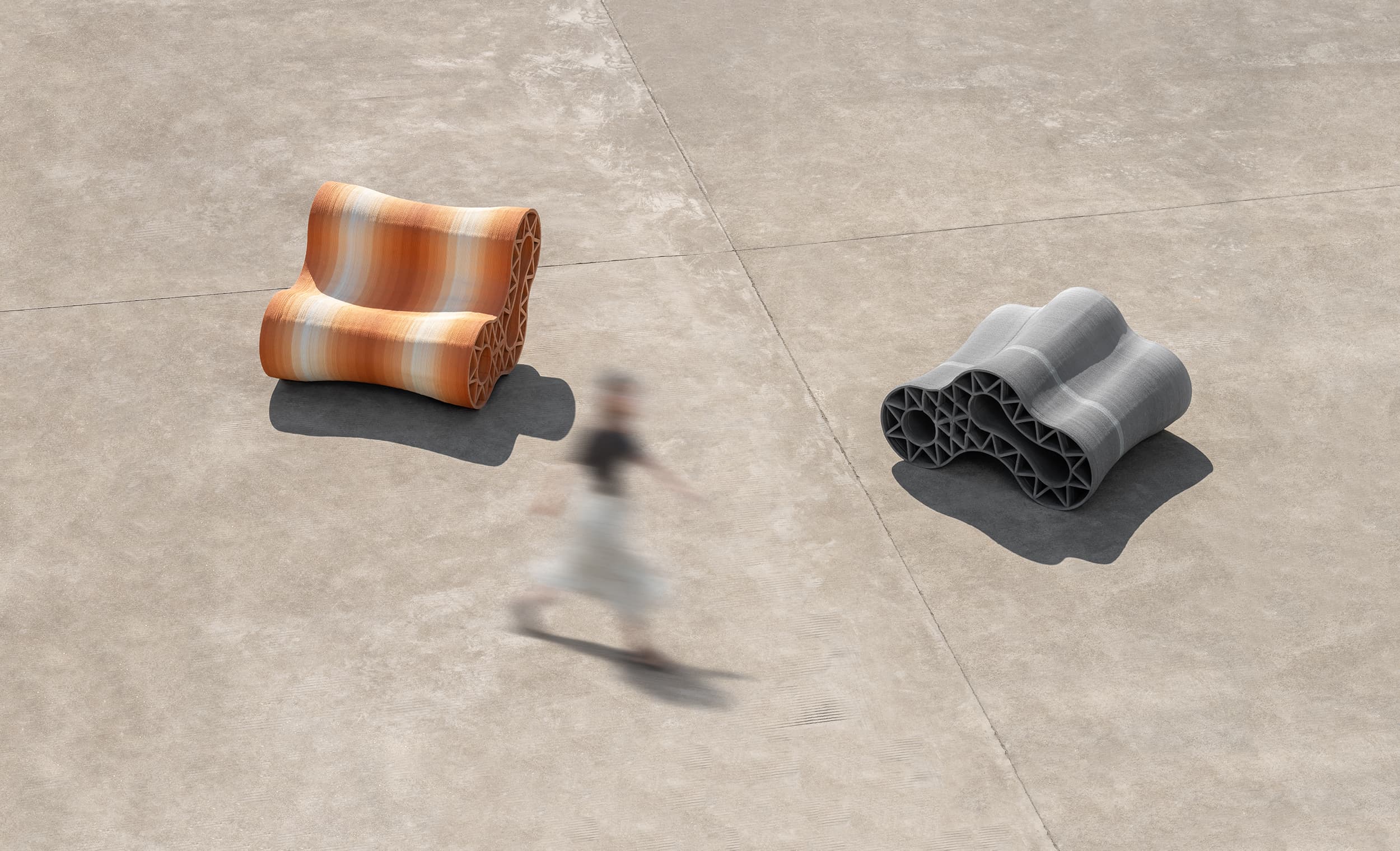
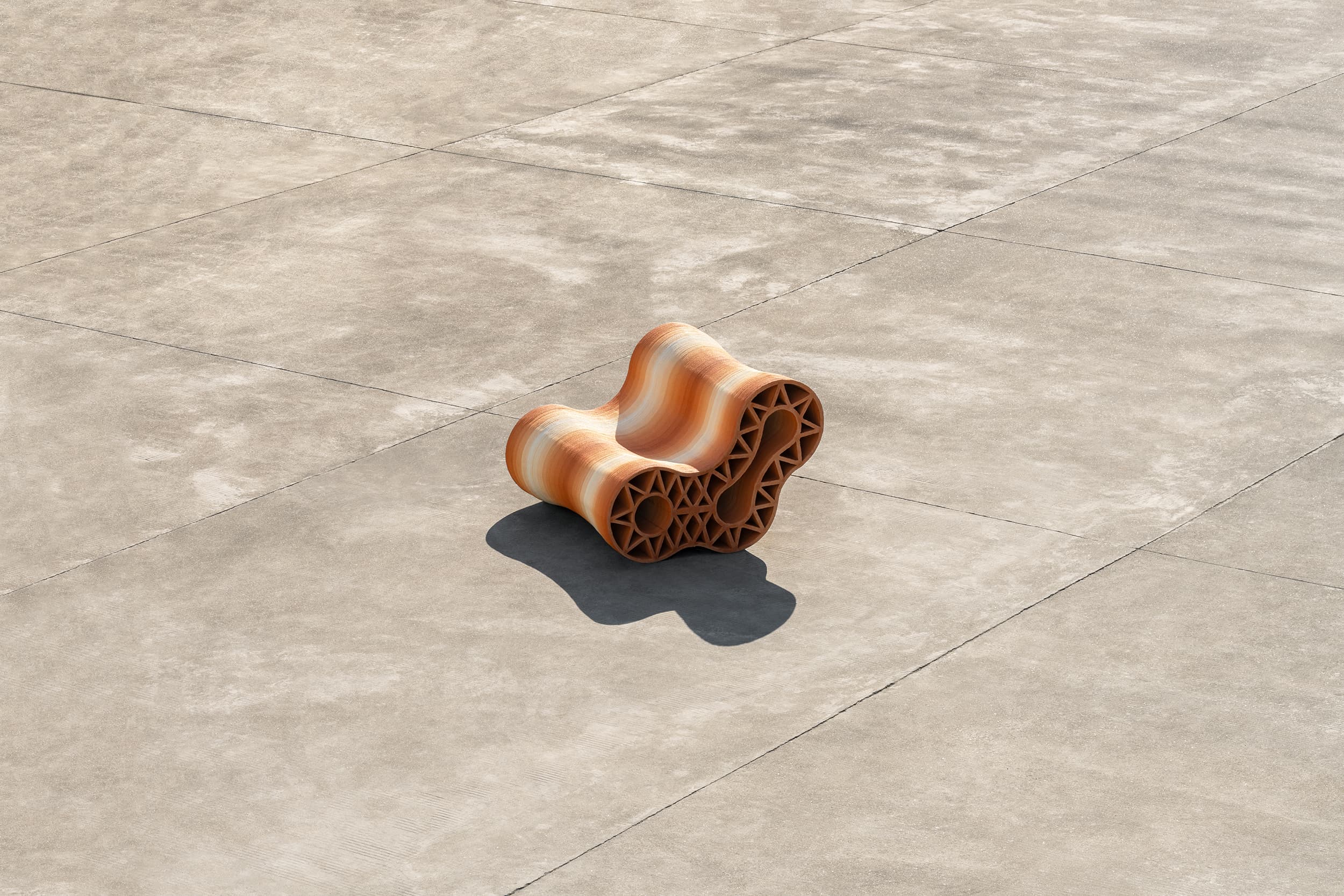


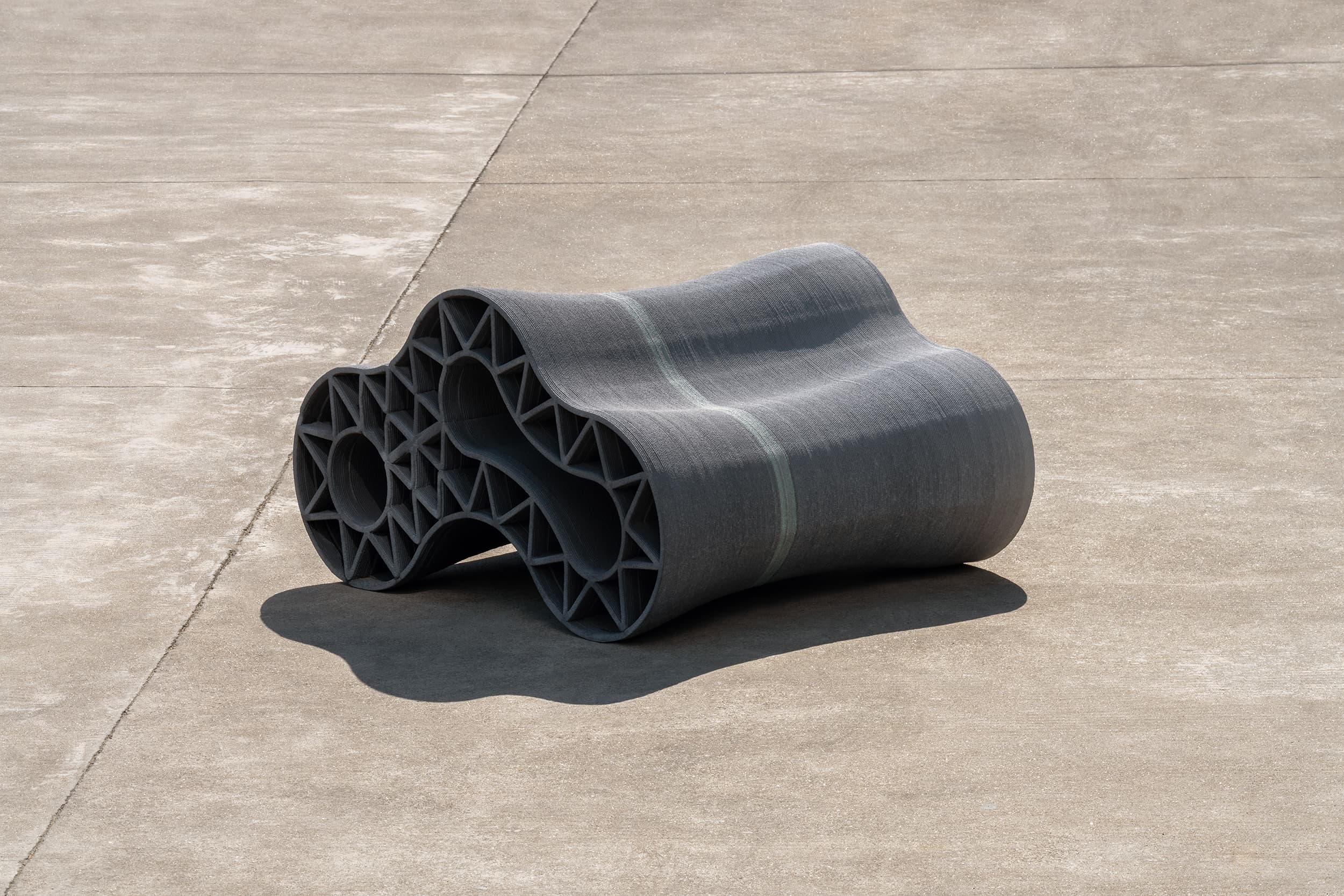
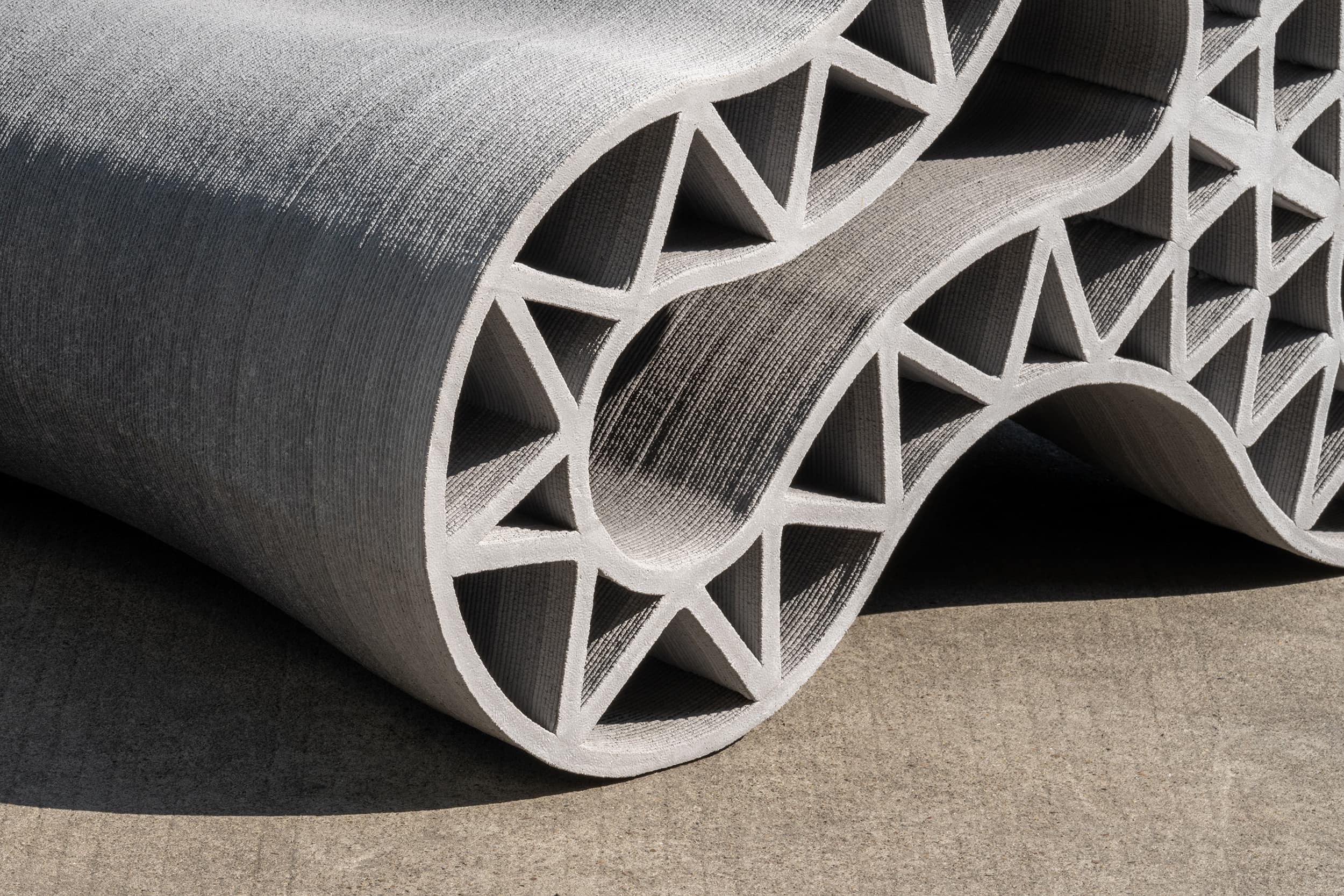
Material Metabolism: Converting Rural Waste into Local Resources In‑Situ
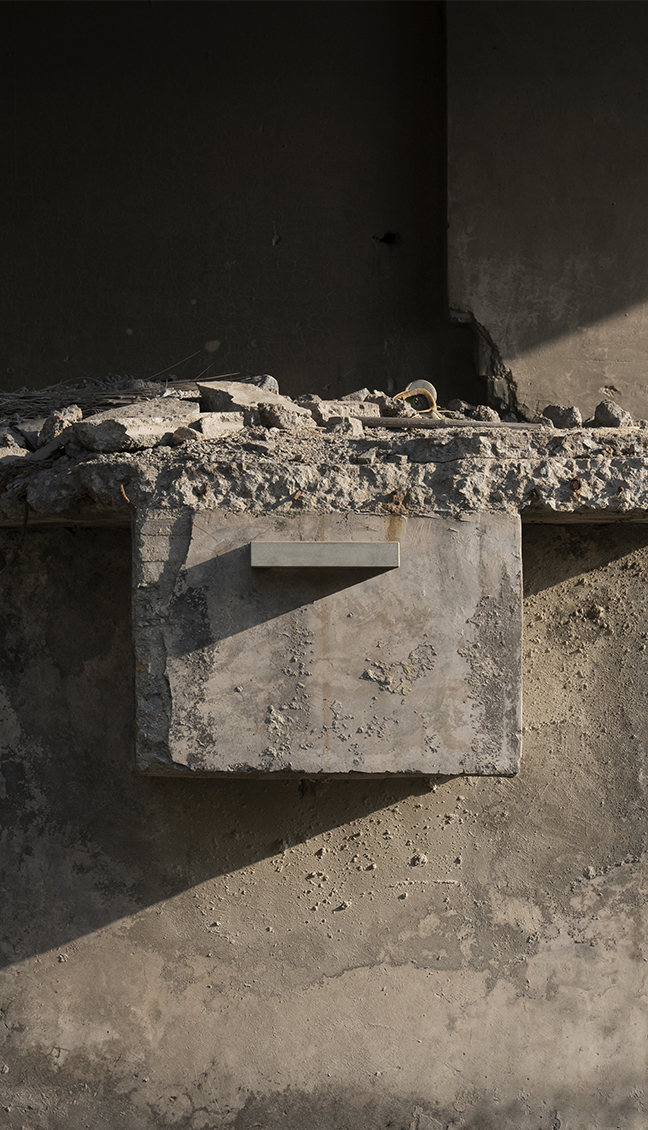
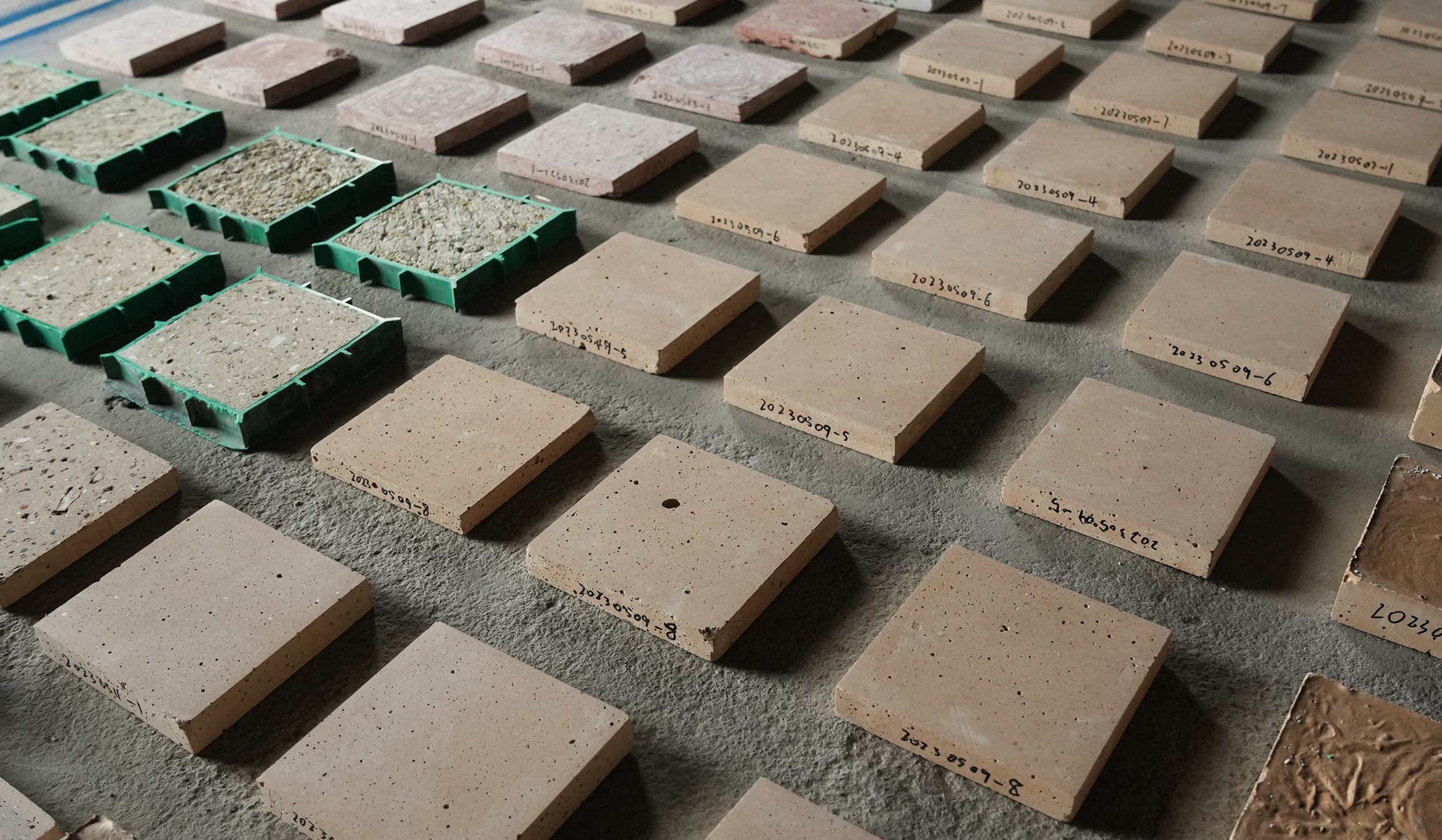
Breaking free from the linear “demolition‑haul‑landfill” model, the project prioritises on‑site reuse and conversion of construction waste. Demolished bricks and rubble are sorted, crushed, graded and modified to produce recycled aggregate compliant with 3D‑printing rheological requirements, enabling genuine zero‑km local material circularity.
Preliminary calculations show that each tonne of reused construction waste avoids approximately 0.5 tonnes of CO₂ emissions. The project processed nearly 120 tonnes of local demolition waste on‑site. More crucially, it shifts from downcycling to upcycling: waste is no longer used as low‑grade backfill or subbase material, but becomes the primary structural component of tactile, aesthetically expressive public furniture. This local material metabolism reduces landfill pressure and soil‑water contamination, drastically cuts carbon emissions from long‑haul transportation, and lowers virgin material procurement costs by roughly 60%. It proves rural areas can build self‑sufficient resource systems using their own waste stockpiles.
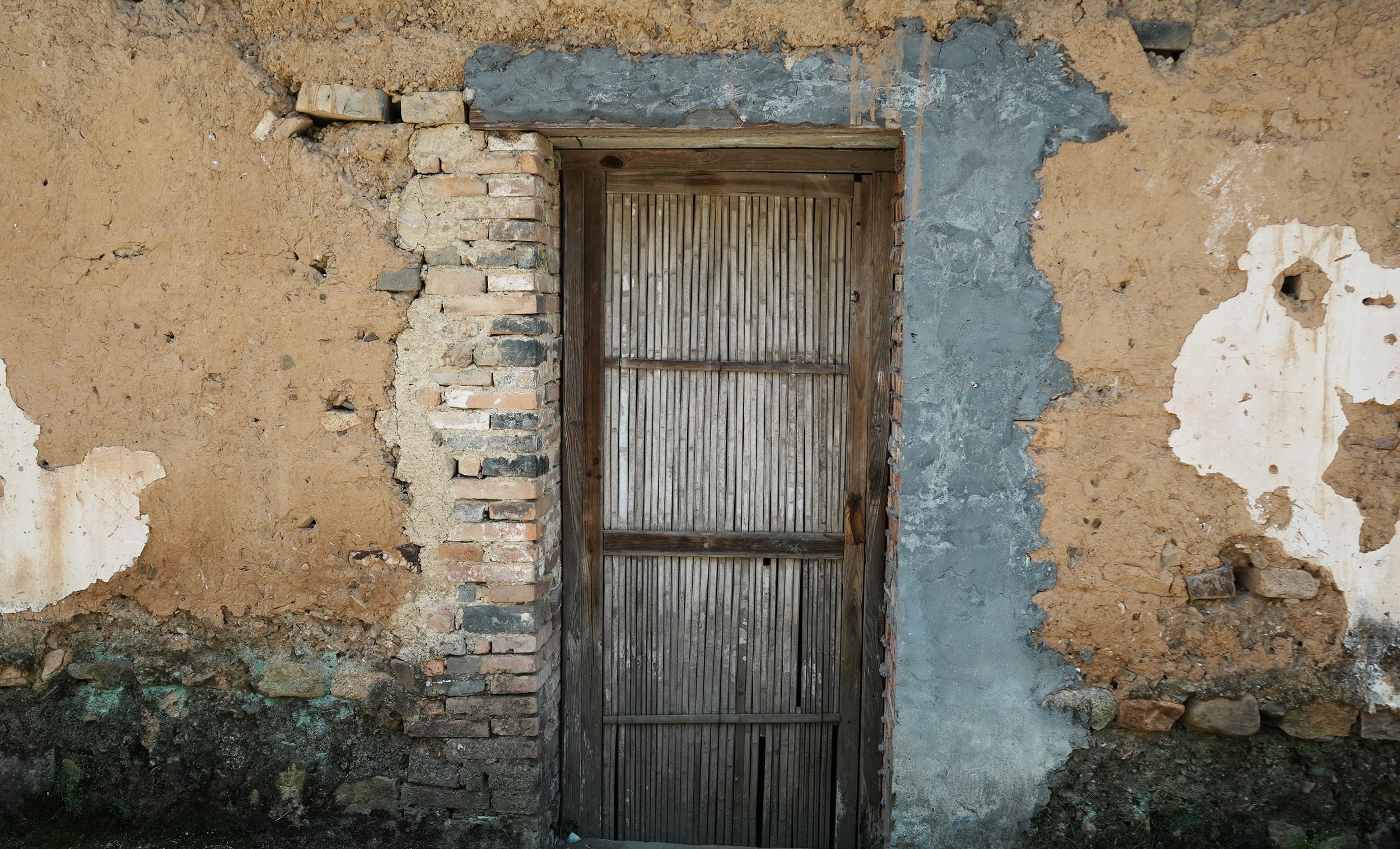
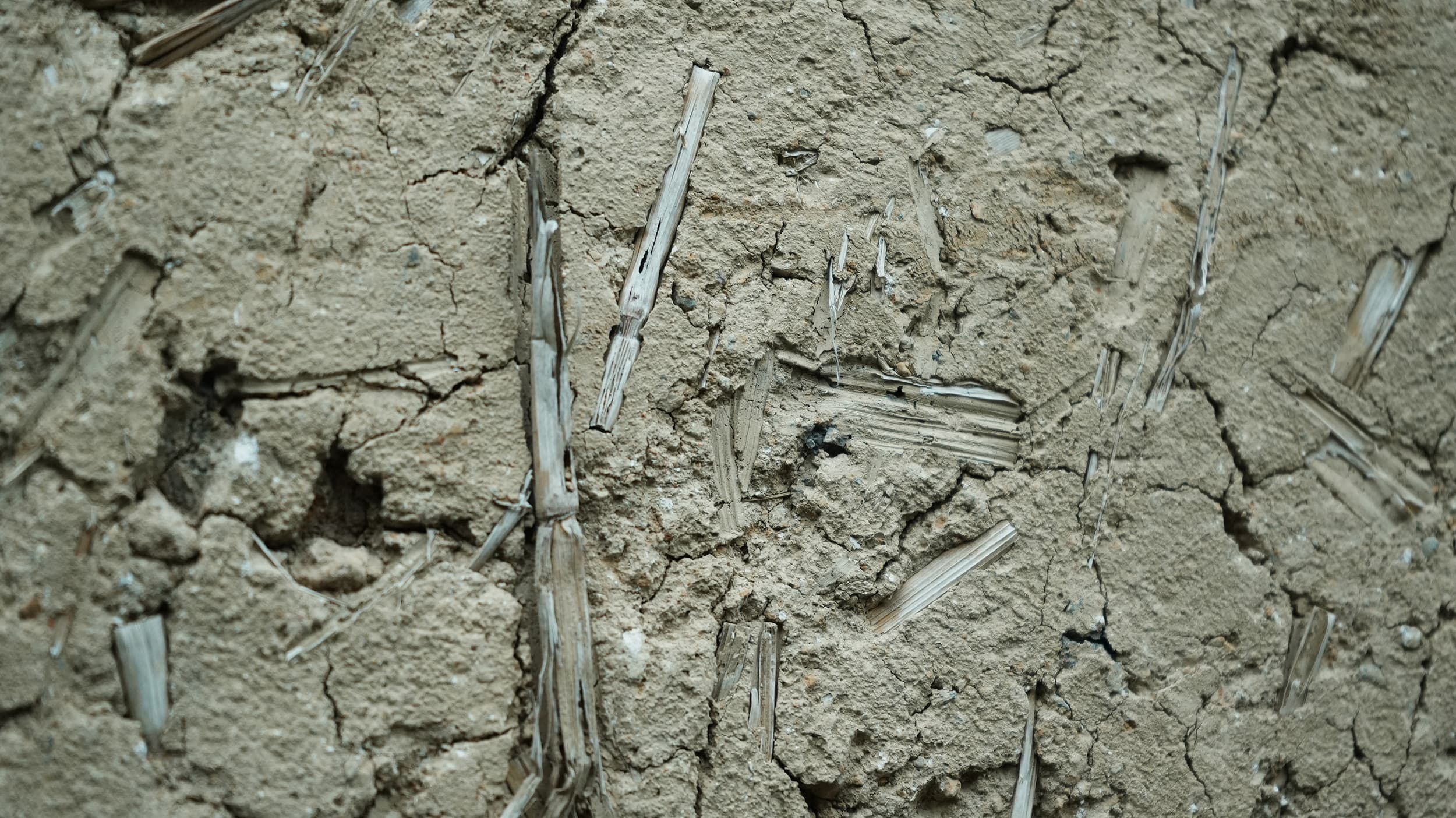
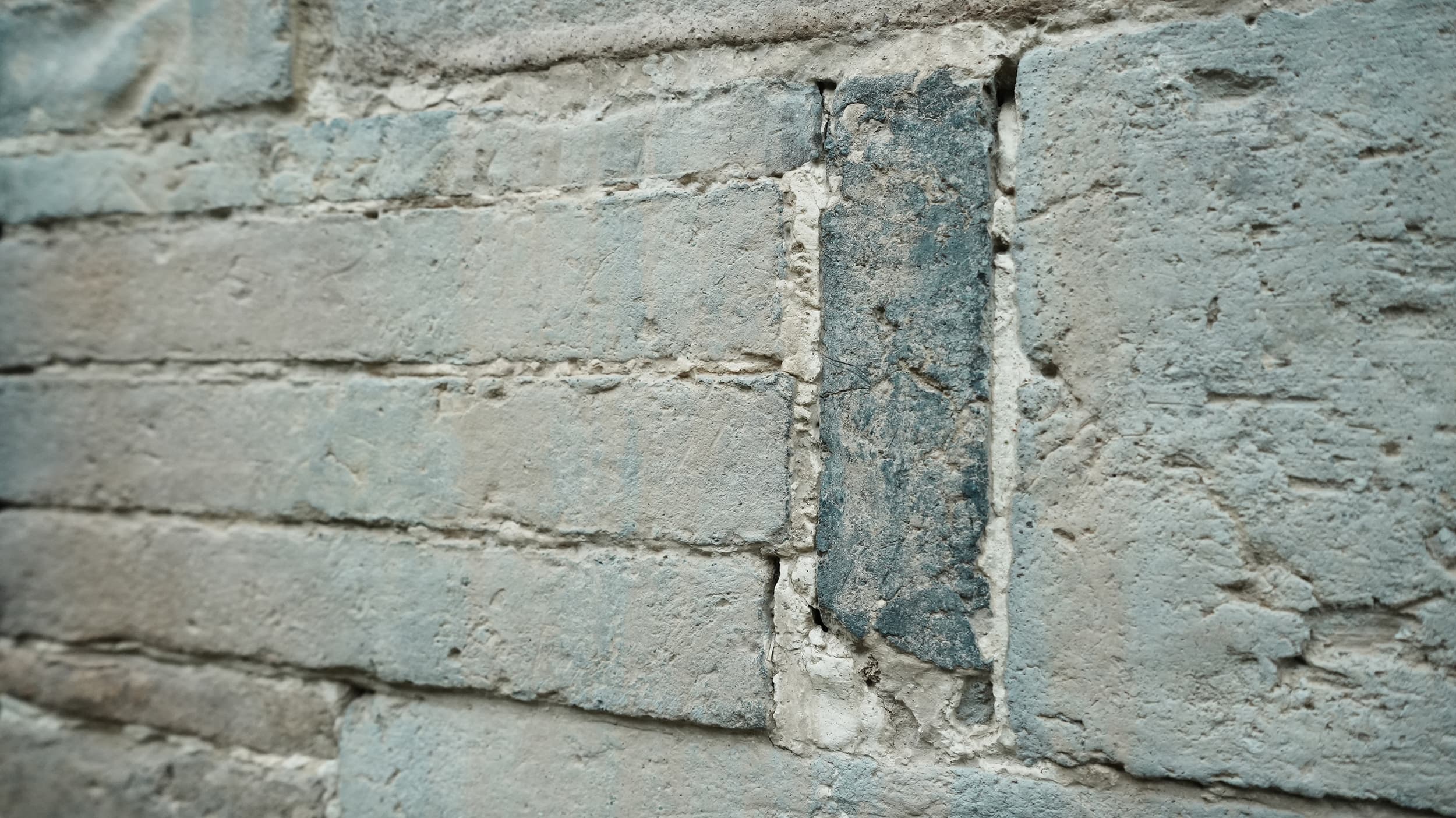
Craft Continuity: Revitalising a Millennium‑Old Shell‑Lime Tradition
Shell‑lime is a time‑honoured cementitious material in Jiangnan’s vernacular architecture, naturally low‑carbon with a carbon footprint merely 30–40% of conventional Portland cement. Yet the rise of industrial building materials has marginalised traditional lime craftsmanship, bringing it close to extinction.
BENTU systematically revitalised and upgraded the ancient technique: low‑temperature calcination at 850 ± 20 °C replaces open‑kiln firing, cutting total energy consumption by 35% and pollutant emissions by over 70%. Locally sourced hemp and bamboo fibres are blended for composite modification, improving flexural toughness by around 32%. The refined shell‑lime‑based cementitious binder retains breathability and low‑carbon performance while perfectly matching the continuous stacking and rapid setting demands of 3D printing.
Most importantly, shell‑lime evolves from a superficial cultural ornament into a load‑bearing structural core. Craftsmen’s empirical judgment of viscosity and tactile feel is translated into actionable digital printing parameters, converting tacit craft knowledge into algorithmic logic and reviving endangered vernacular techniques within contemporary digital fabrication.
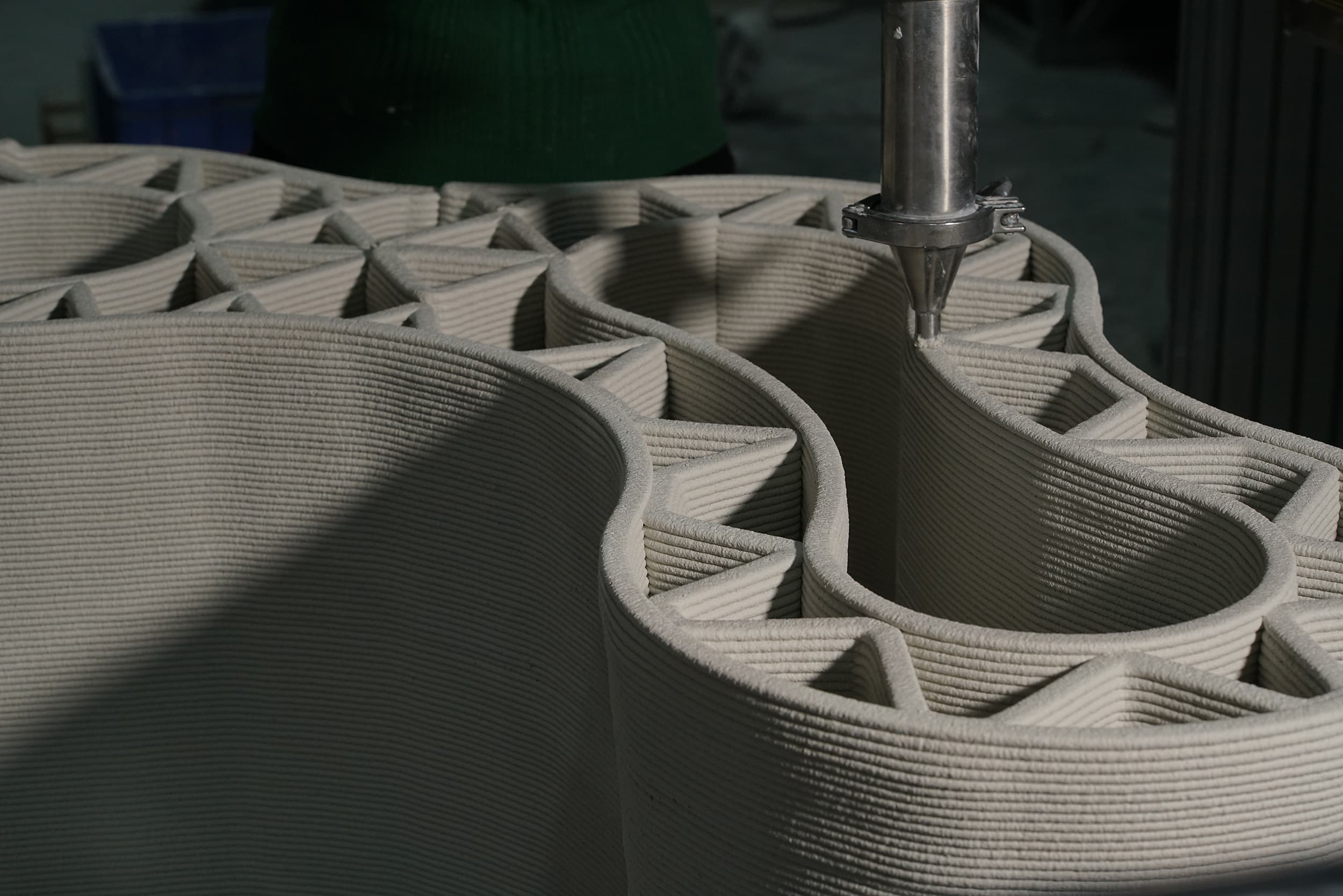
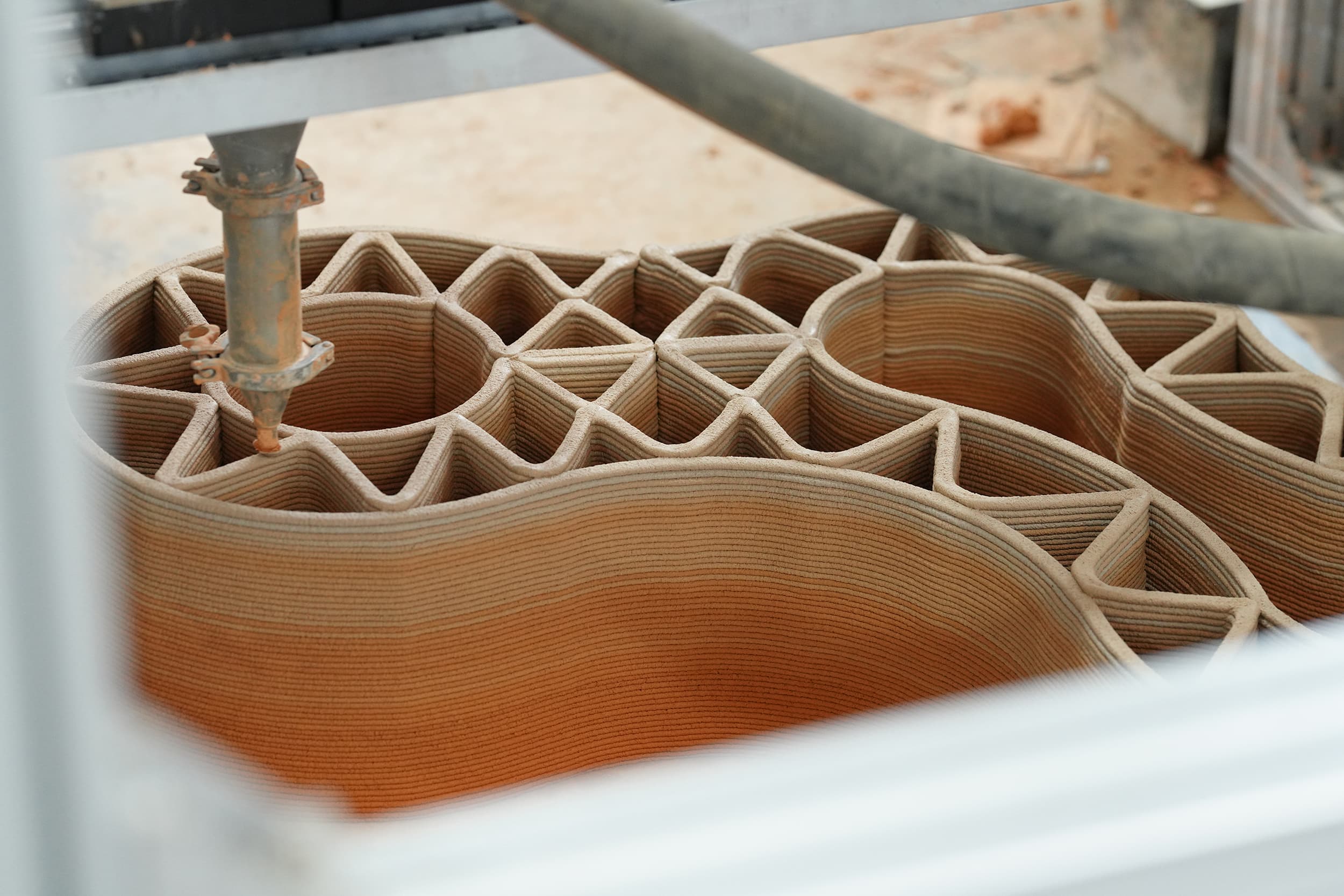
On‑Site Fabrication: Three Transformative Local Breakthroughs of Mobile 3D Printing
A mobile 3D‑printing workstation operates directly within the village to custom‑fabricate public furniture in situ. This fabrication‑as‑construction model delivers three pivotal localised innovations:
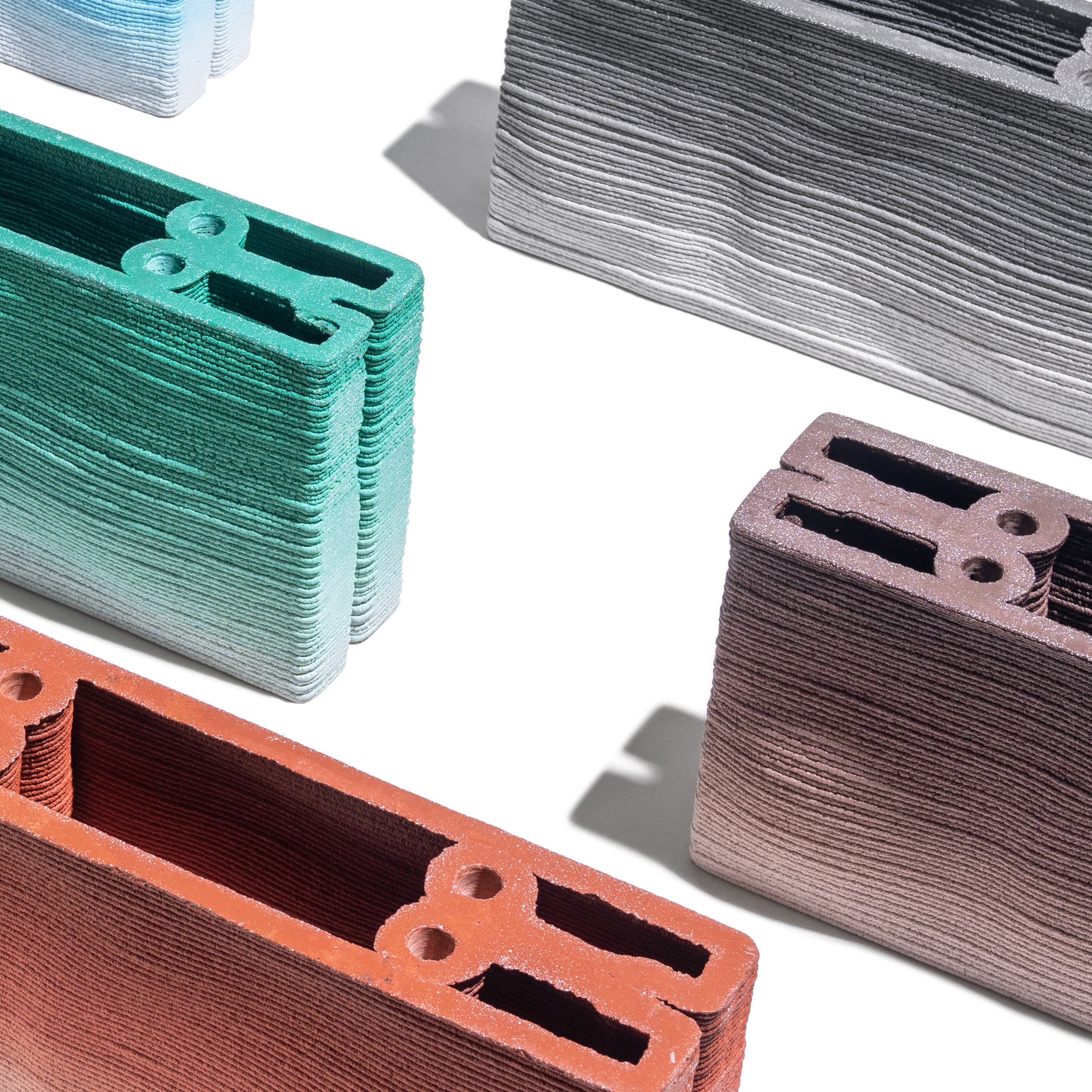
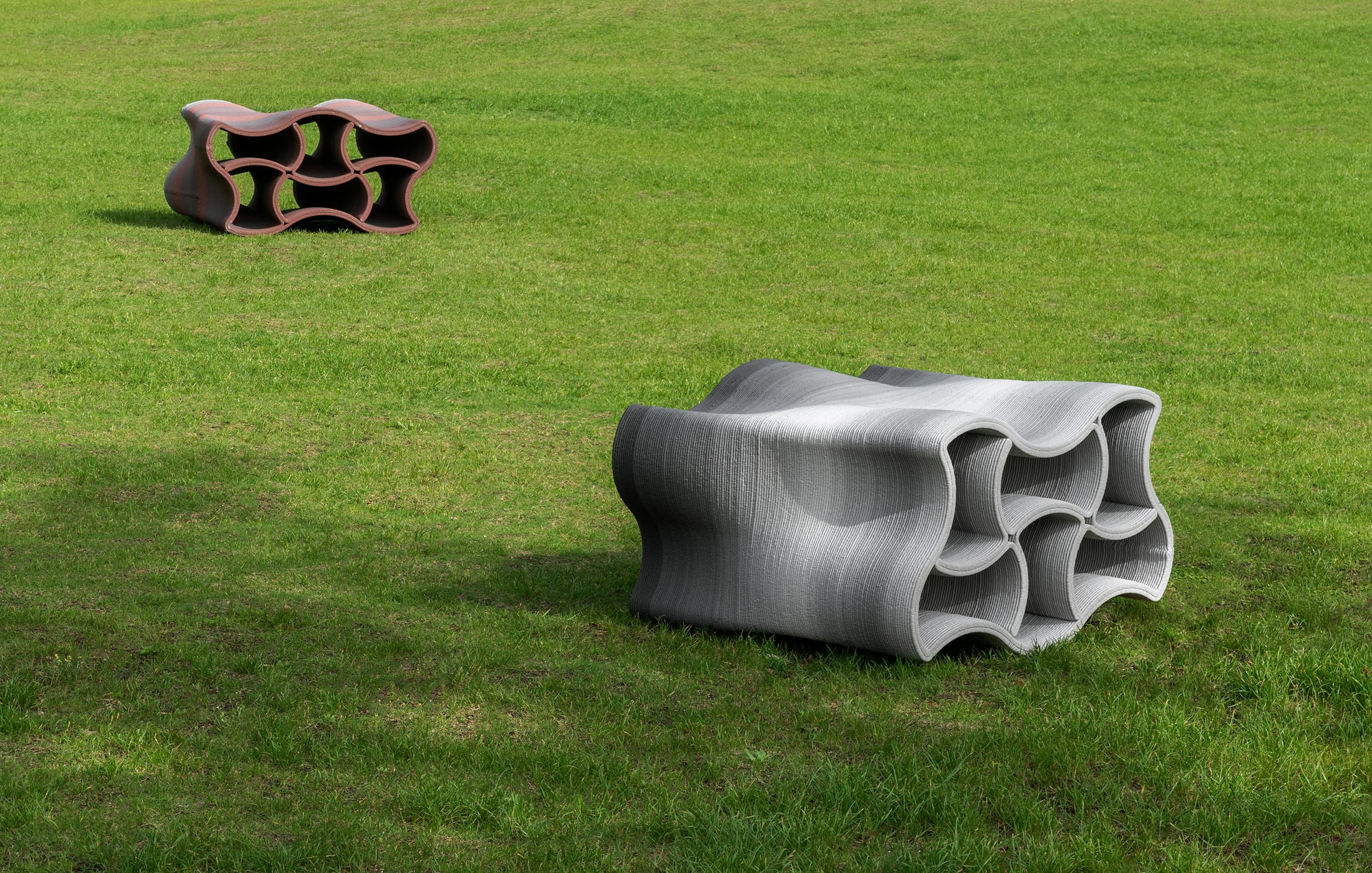
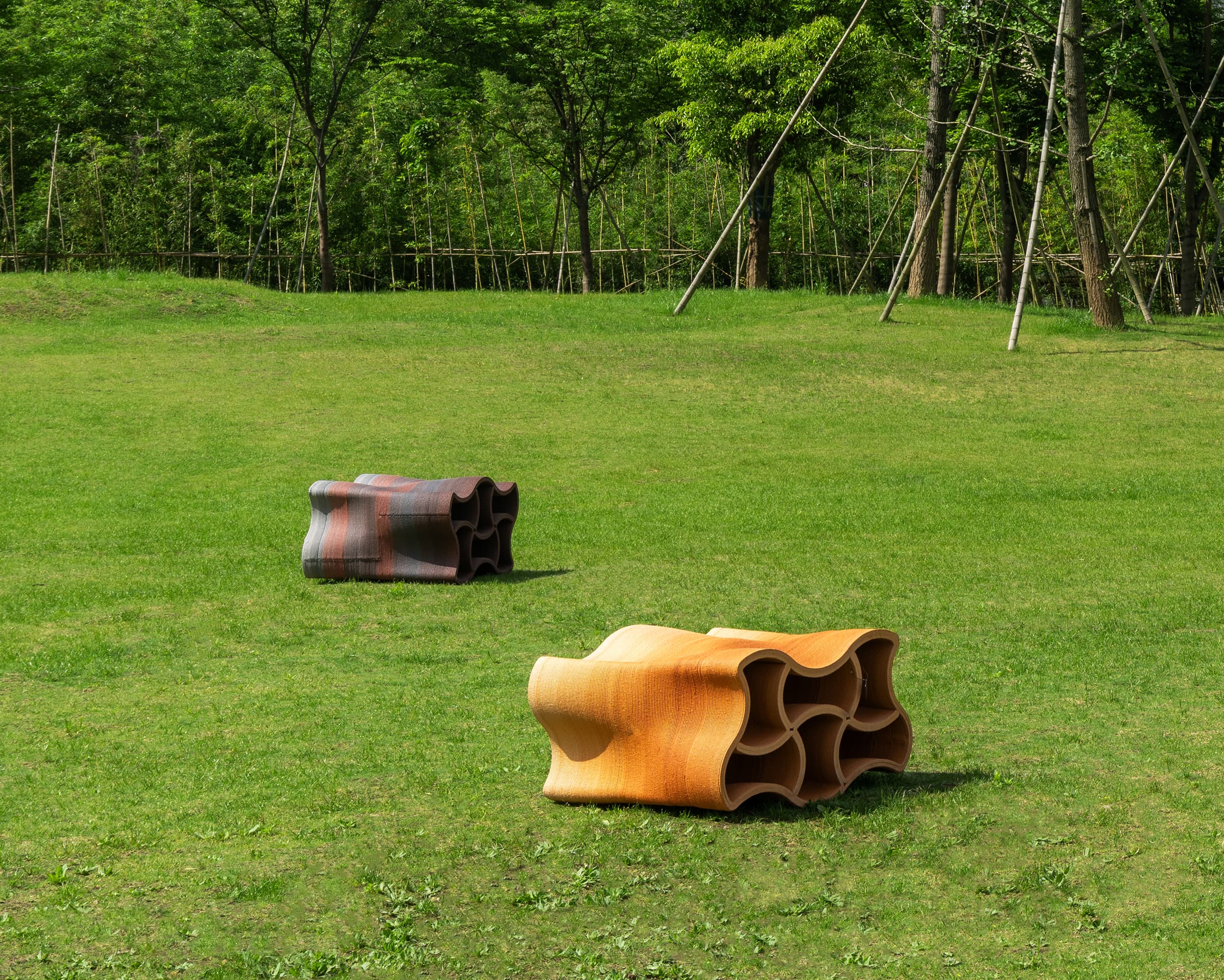
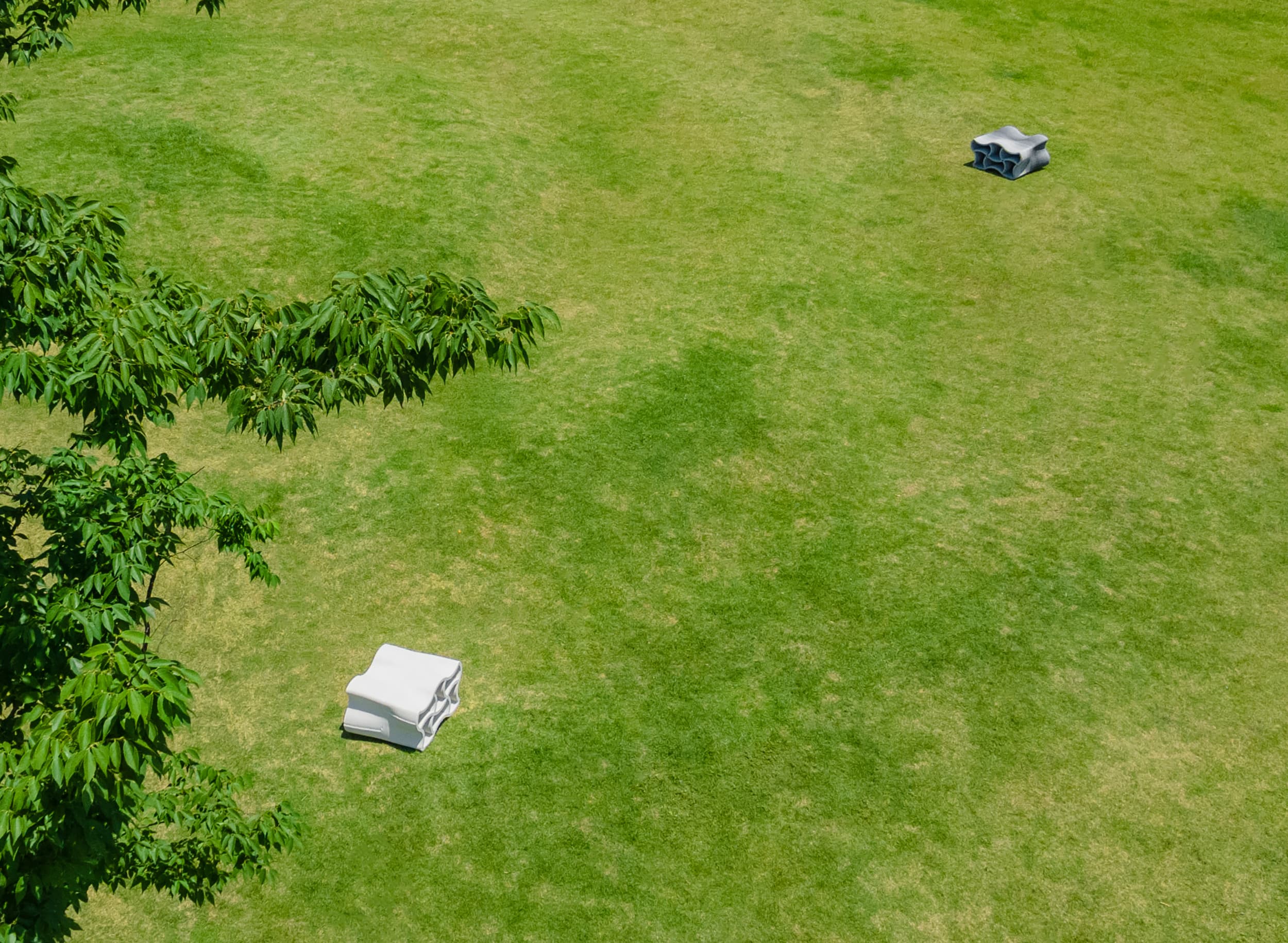
First, eliminating intermediate logistics and storage. Where conventional projects require material transport over dozens of kilometres, all movement is contained within 1.5 km of the site, slashing logistics‑related carbon emissions to under 5% of baseline levels; Second, precise digital material control eliminates cutting and formwork waste, pushing overall material utilisation above 98% for near‑zero construction waste; Third, the system adapts to complex rural terrain. Laser scanning captures on‑site point‑cloud data to enable fabrication on slopes, beneath trees and along field edges. Finished pieces integrate seamlessly with the landscape as organically grown site‑specific structures.
System Closure: Establishing a Rural Micro‑Circular Framework
The project deeply integrates construction waste, traditional shell‑lime craft and mobile 3D printing to form a closed rural loop of waste stock – local craft – digital fabrication. It draws on local demolition debris and indigenous craft knowledge as input; transforms materials via on‑site digital manufacturing; and allows aged furniture to be crushed and reused as aggregate upon end‑of‑life. The result is a short‑chain, low‑energy “produce‑use‑reproduce” circular system.
Preliminary life‑cycle assessment shows per‑unit carbon emissions of public furniture fall from 380 kg CO₂e under conventional prefabrication to 95 kg CO₂e, a 75% reduction. Beyond carbon savings, the project redefines deep localisation: moving beyond superficial use of local stone or timber to create a self‑sustaining system that activates waste reserves, sustains craft heritage and enables on‑site manufacturing.
Technological Symbiosis: Synergy Between Low‑Tech and High‑Tech
Inorganic Editing acts as an experimental prototype for rural construction, exploring synergistic interplay between vernacular low‑tech craft and digital high‑tech tools. Rather than replacing shell‑lime techniques with 3D printing or rejecting digitalisation for tradition alone, the project lets low‑tech and high‑tech practices mutually reinforce one another.
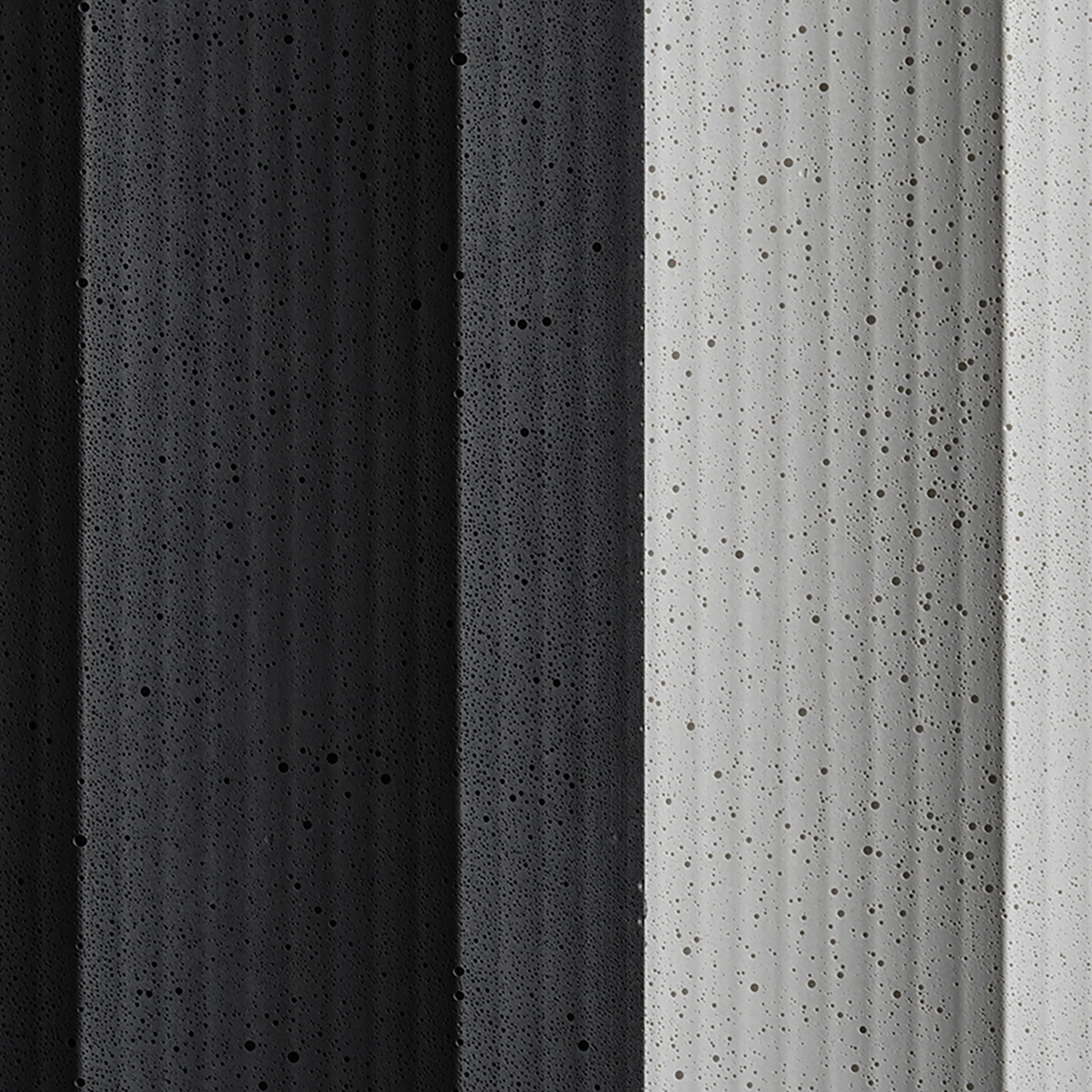
It challenges mainstream centralised prefabrication and long‑distance delivery models: decentralised, small‑batch, localised micro‑production can deliver high‑quality public works far better aligned with rural scale, ecology and cultural identity. The transparent fabrication process lets villagers observe raw aggregate textures and layered print patterns, while inviting community participation. This participatory place‑making offers a sustainable alternative to globalised long‑distance supply chains.
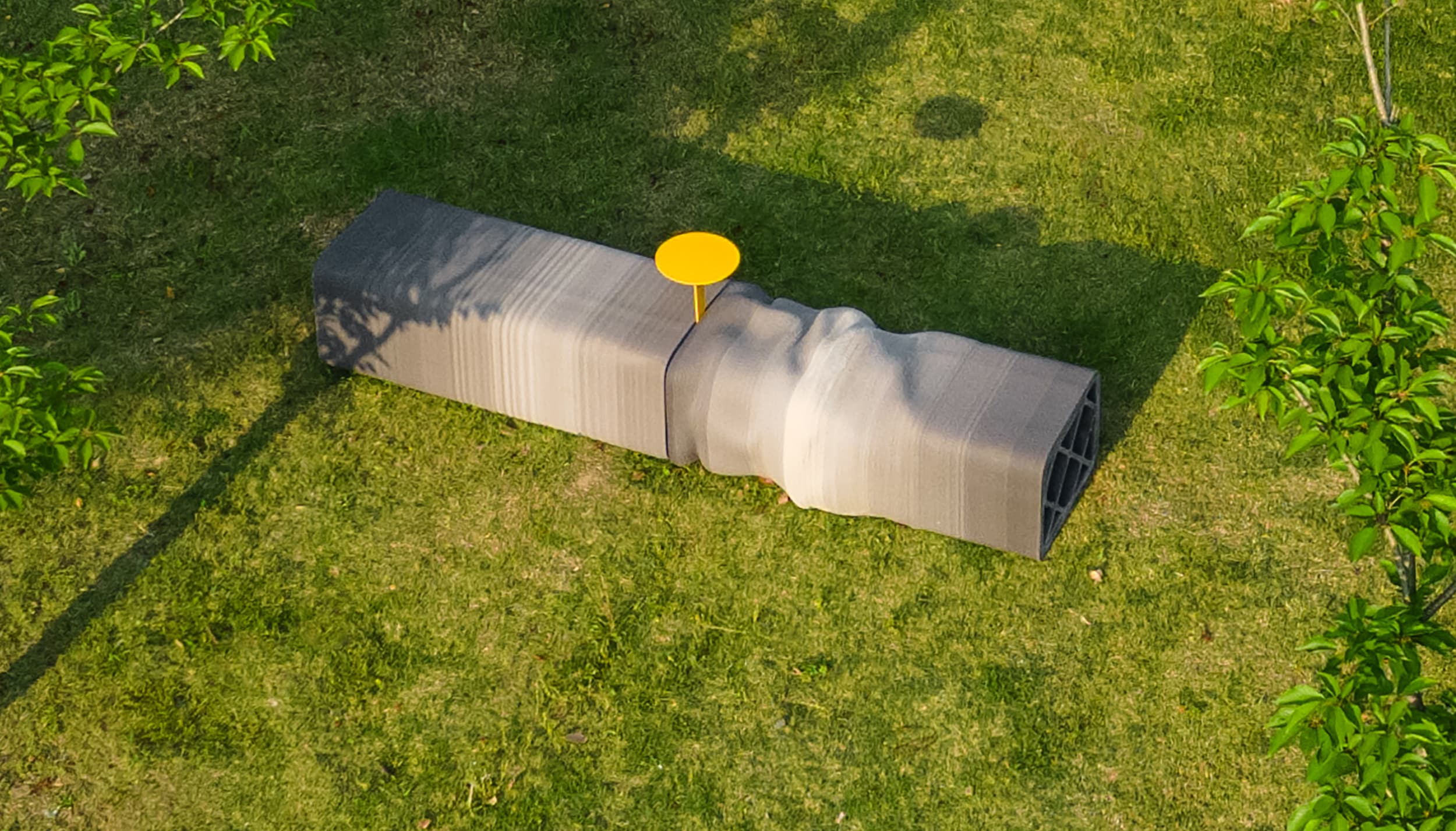
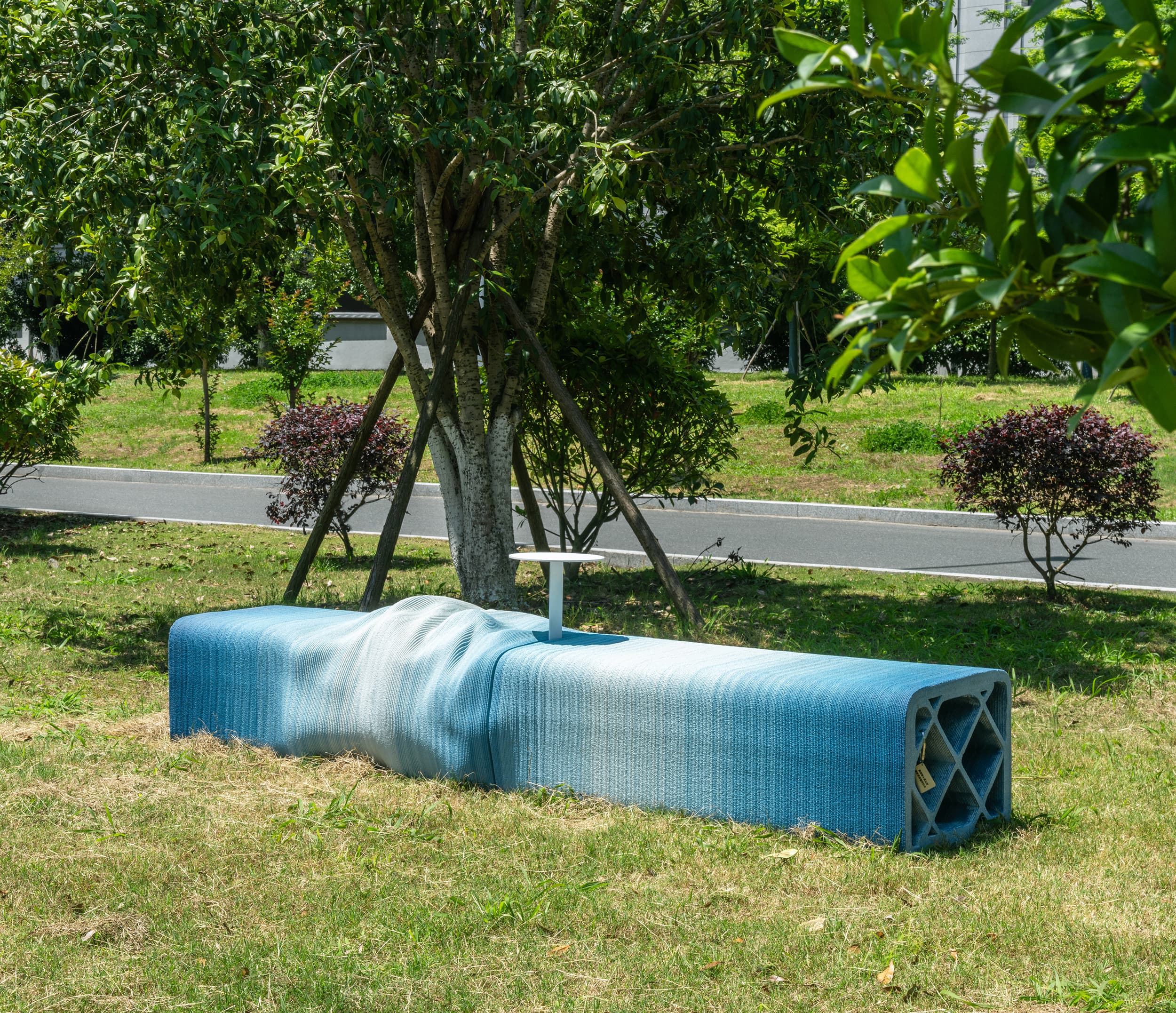
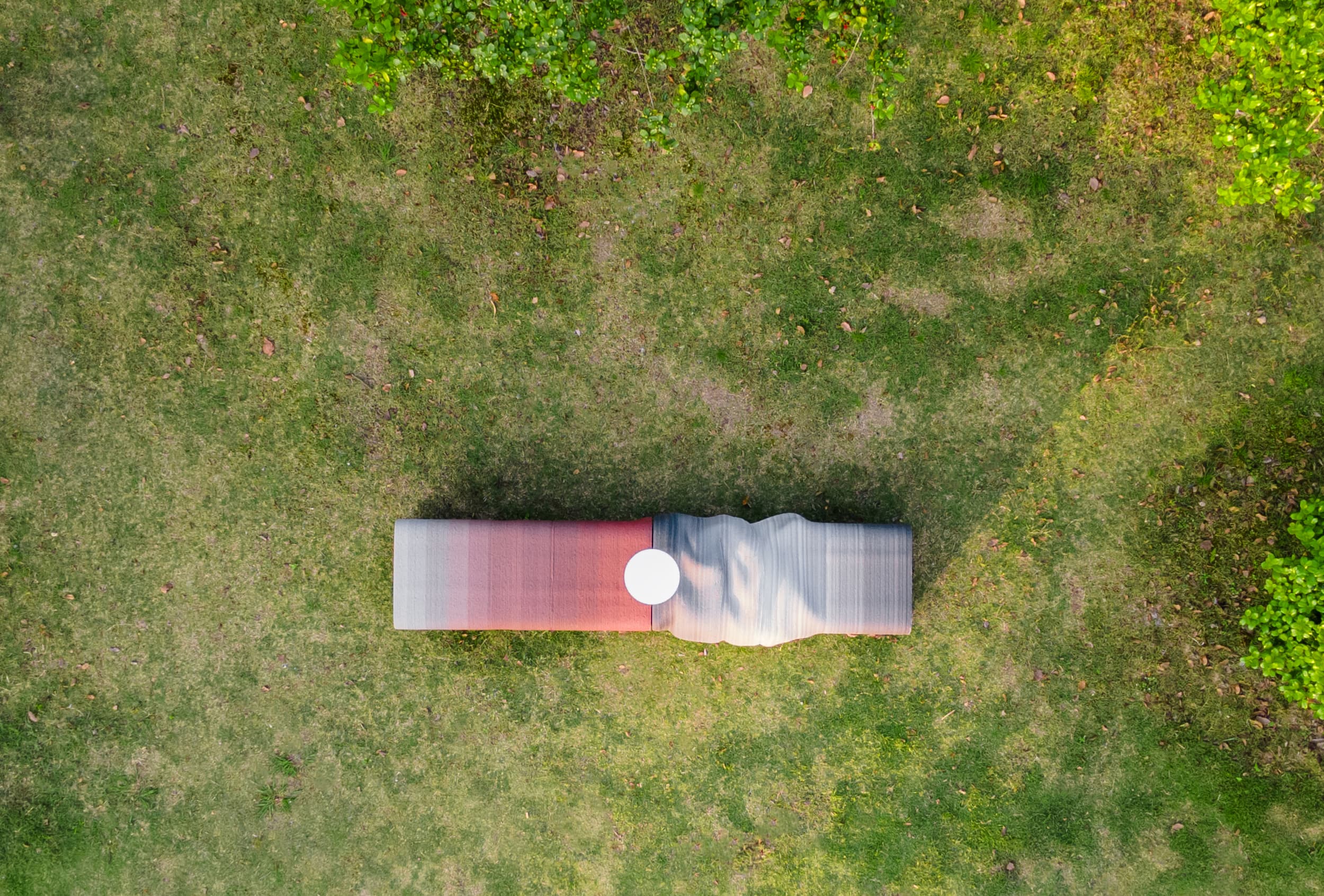
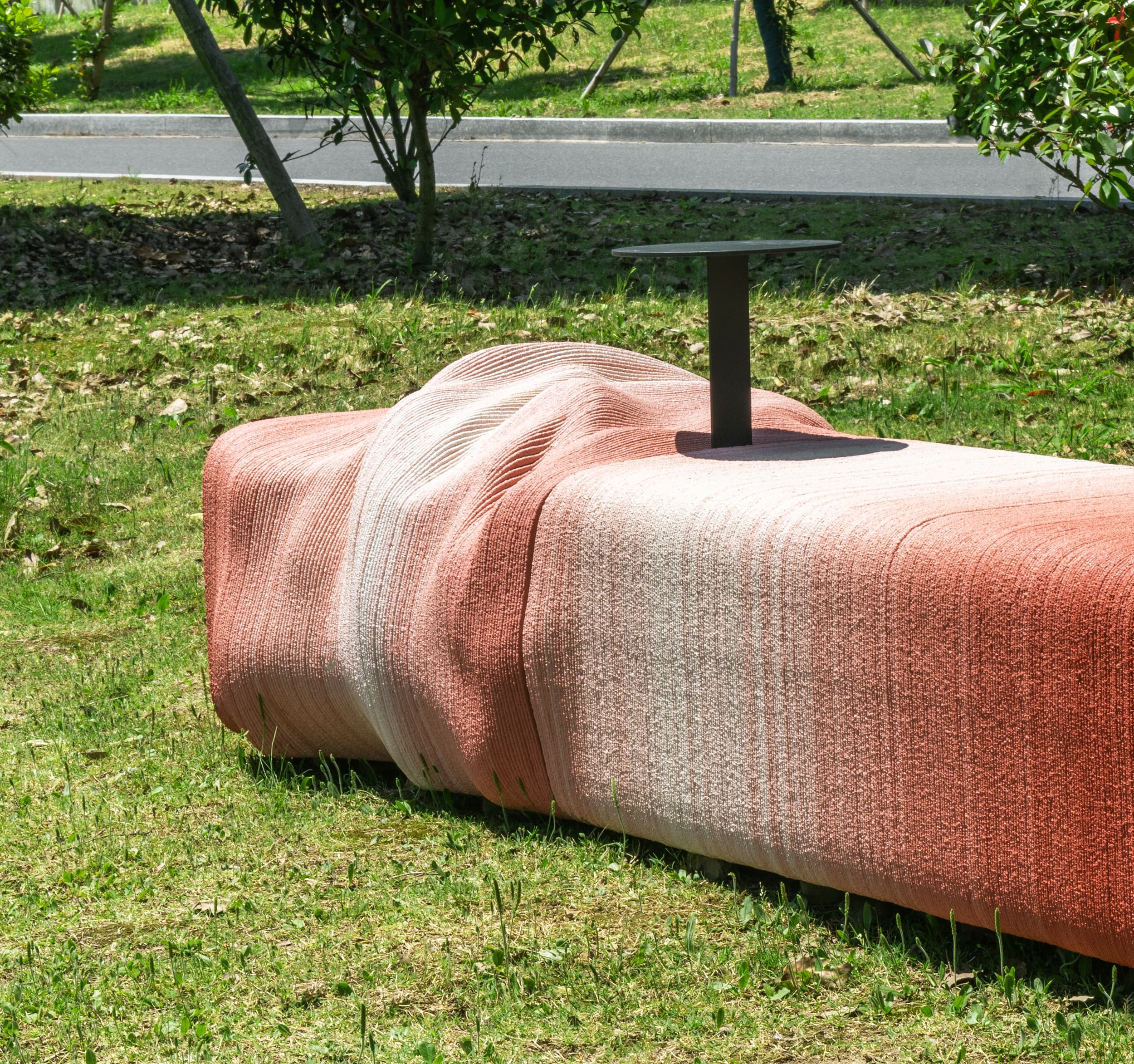
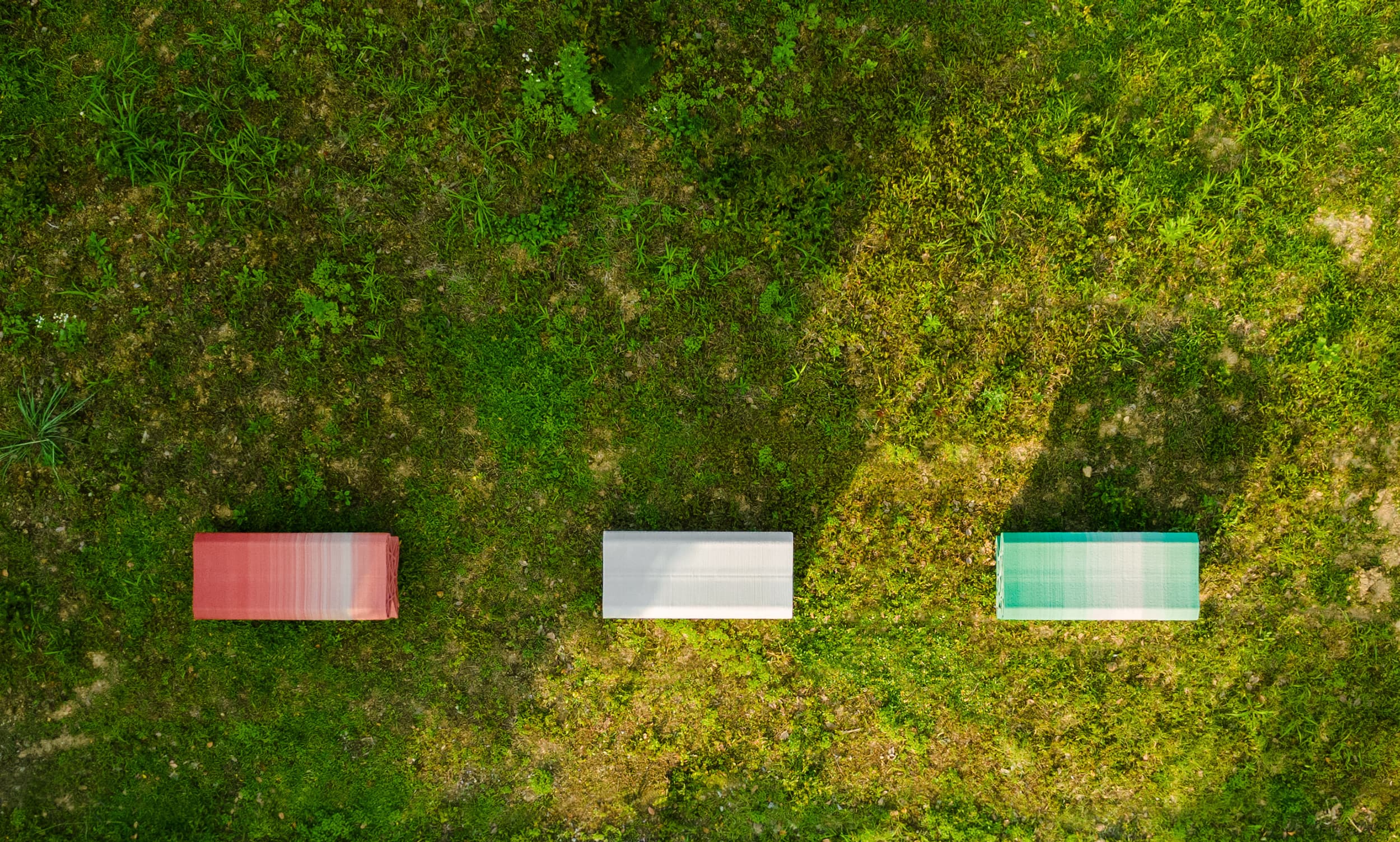
Inorganic Editing embodies a core design ethos: every locality holds unique reserves of inorganic matter and cultural heritage. With appropriate technology and open‑minded design, each rural community can shape its own spatial character and public realm.
Future rural design may no longer prioritise scale, speed or cost efficiency alone, but turn toward closed‑loop low‑carbon performance and human‑centred empathy. This is the vital direction for rural construction revealed by Qingshan Village’s experimental prototype.
Design Director: Xu Gang
This article is an original work of the BENTU Local Regeneration Practice Series. Taking 3D‑printed public furniture in Qingshan Village as a case study, it documents deeply localised practice integrating construction waste, traditional craft and digital fabrication.

- Contact
+8620 8977 0506
- Press
press@bentudesign.com
- Enquiry & Sales
info@bentudesign.com